
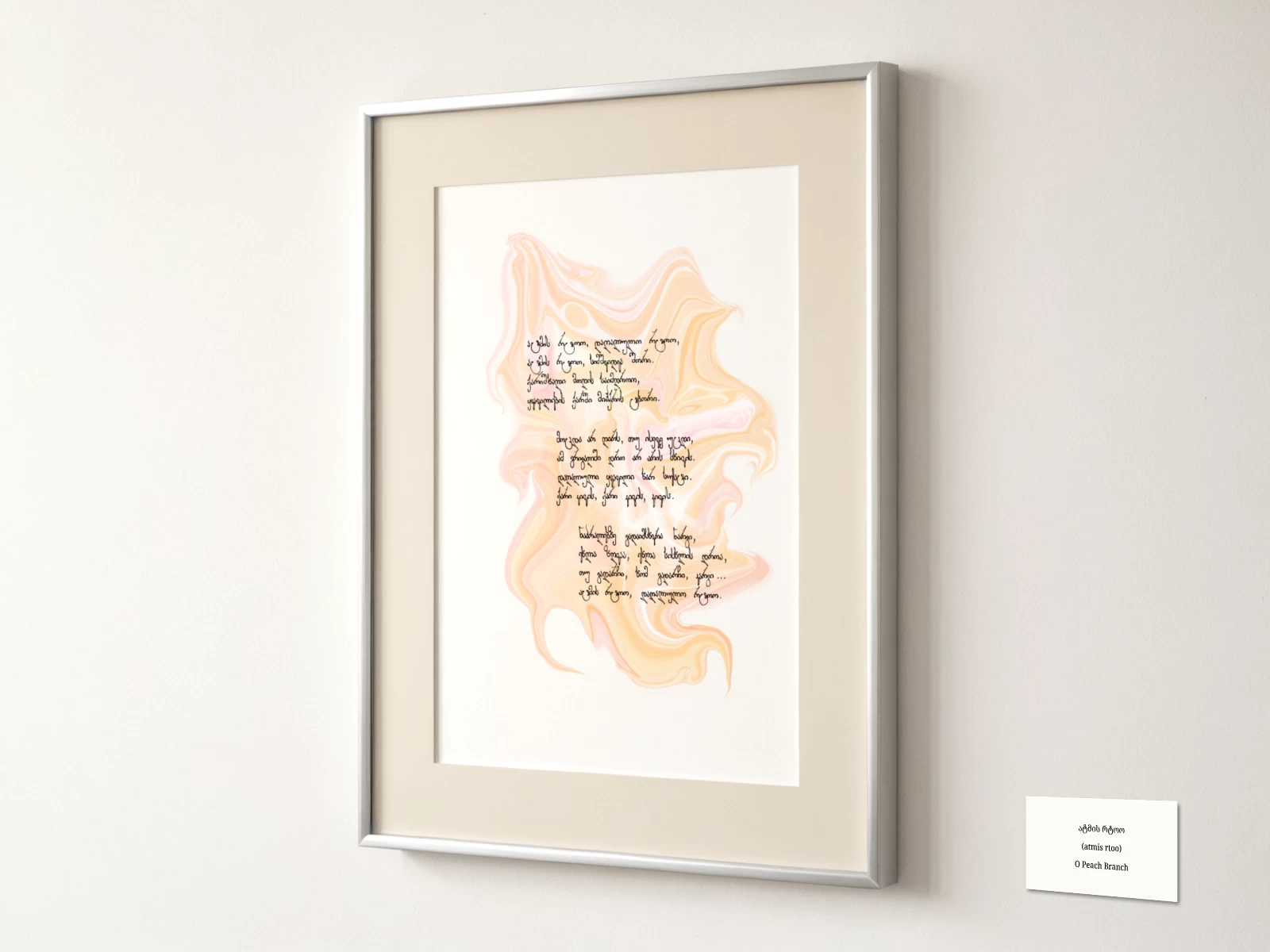
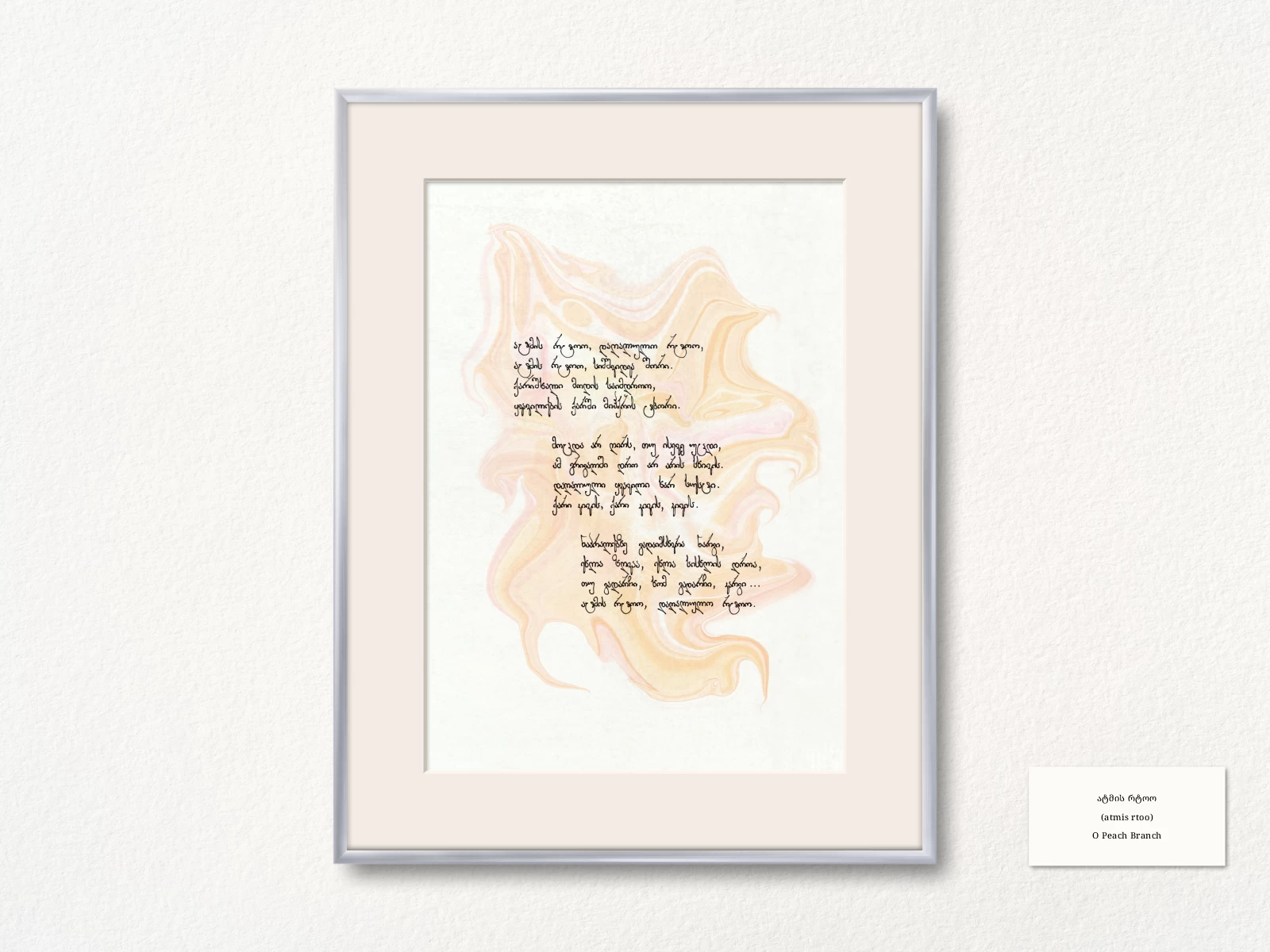
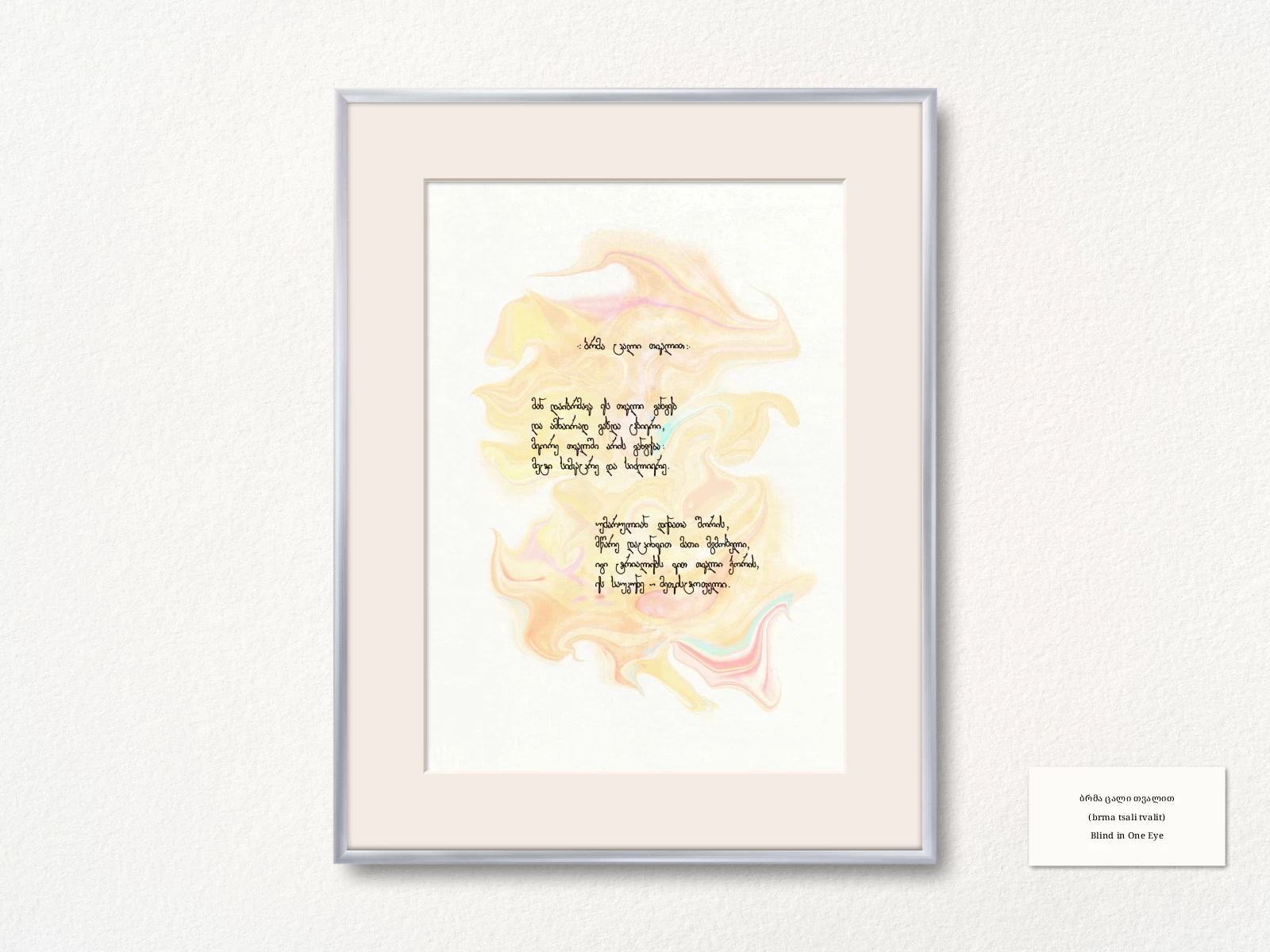
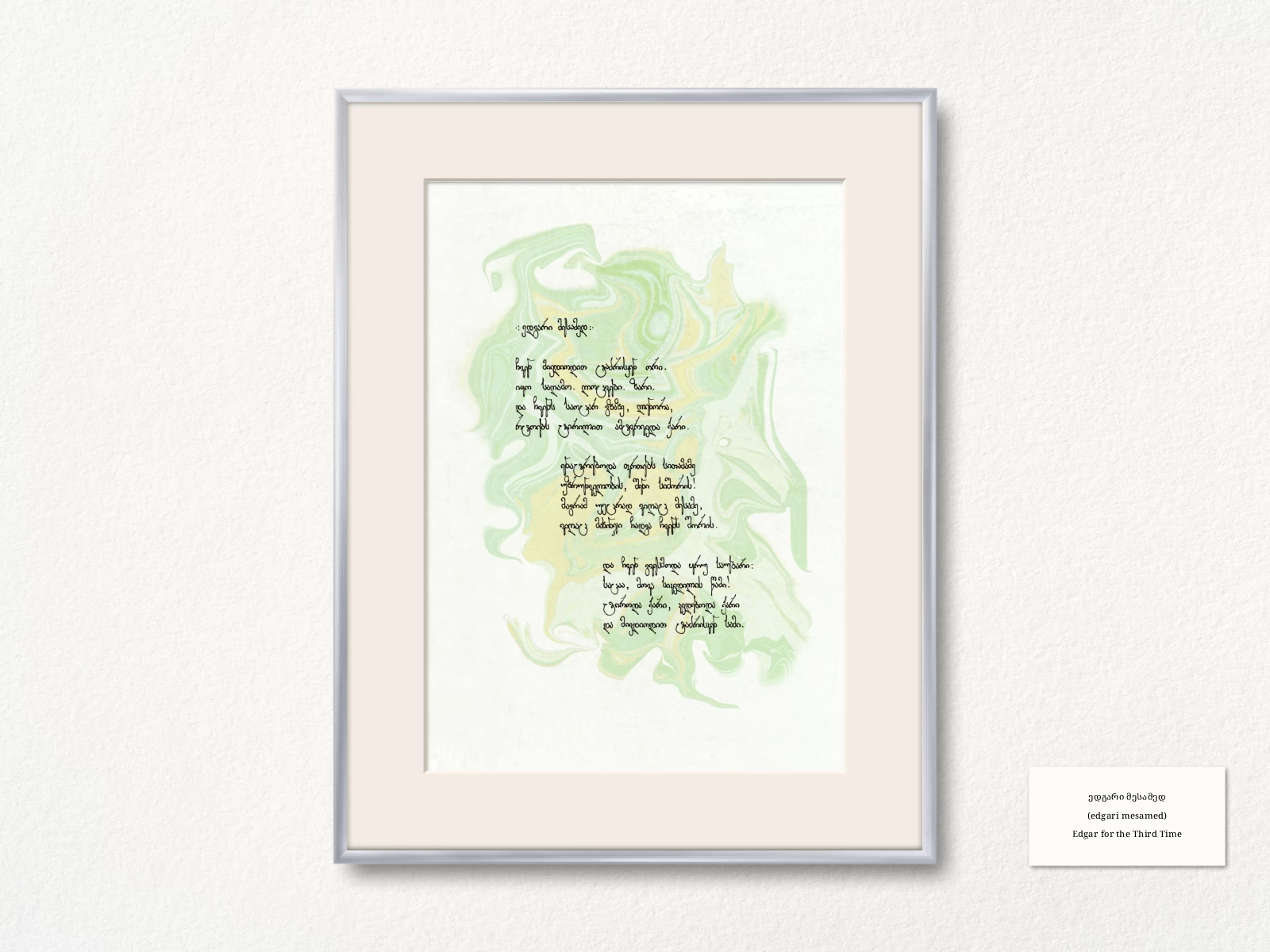
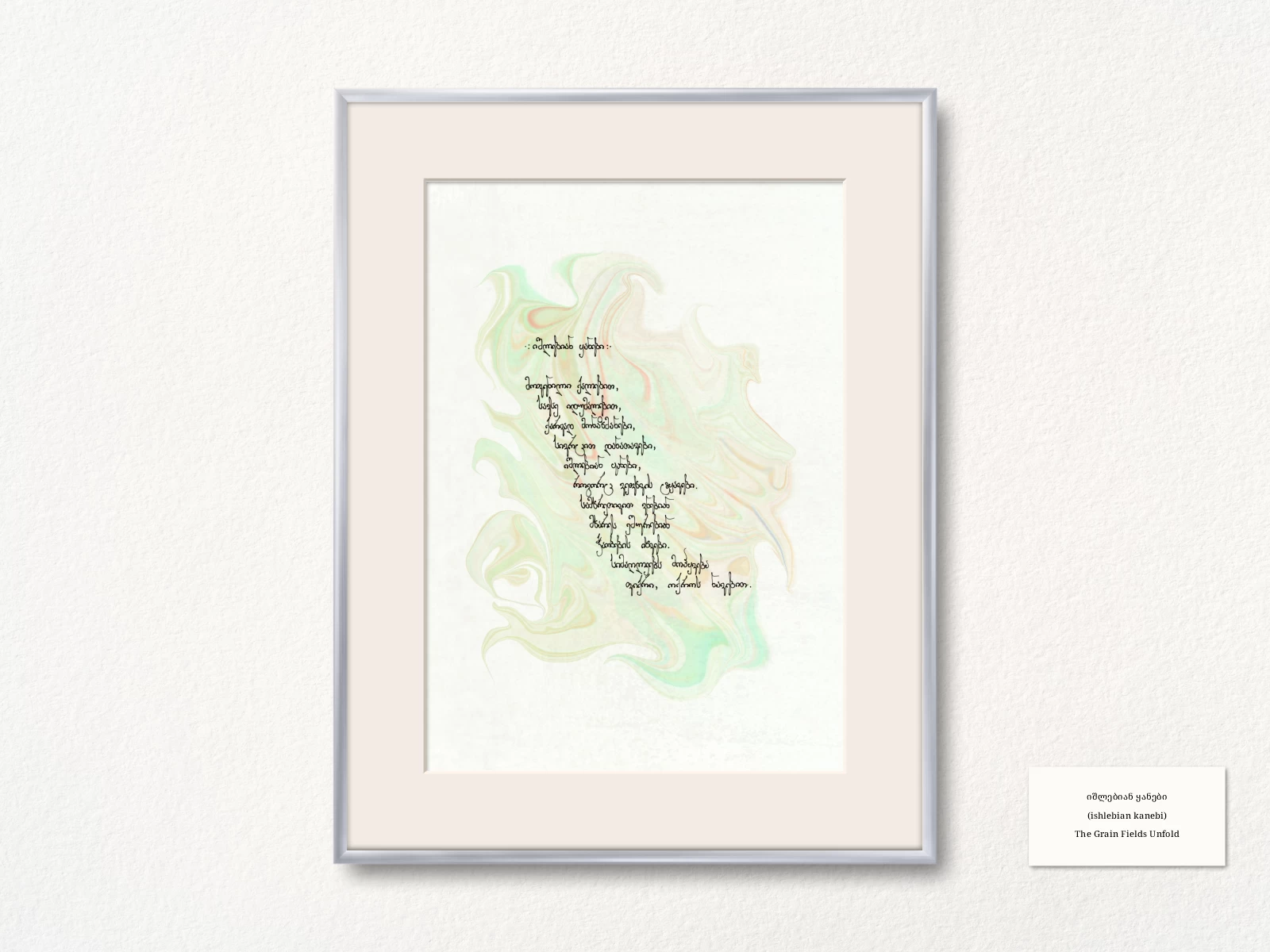
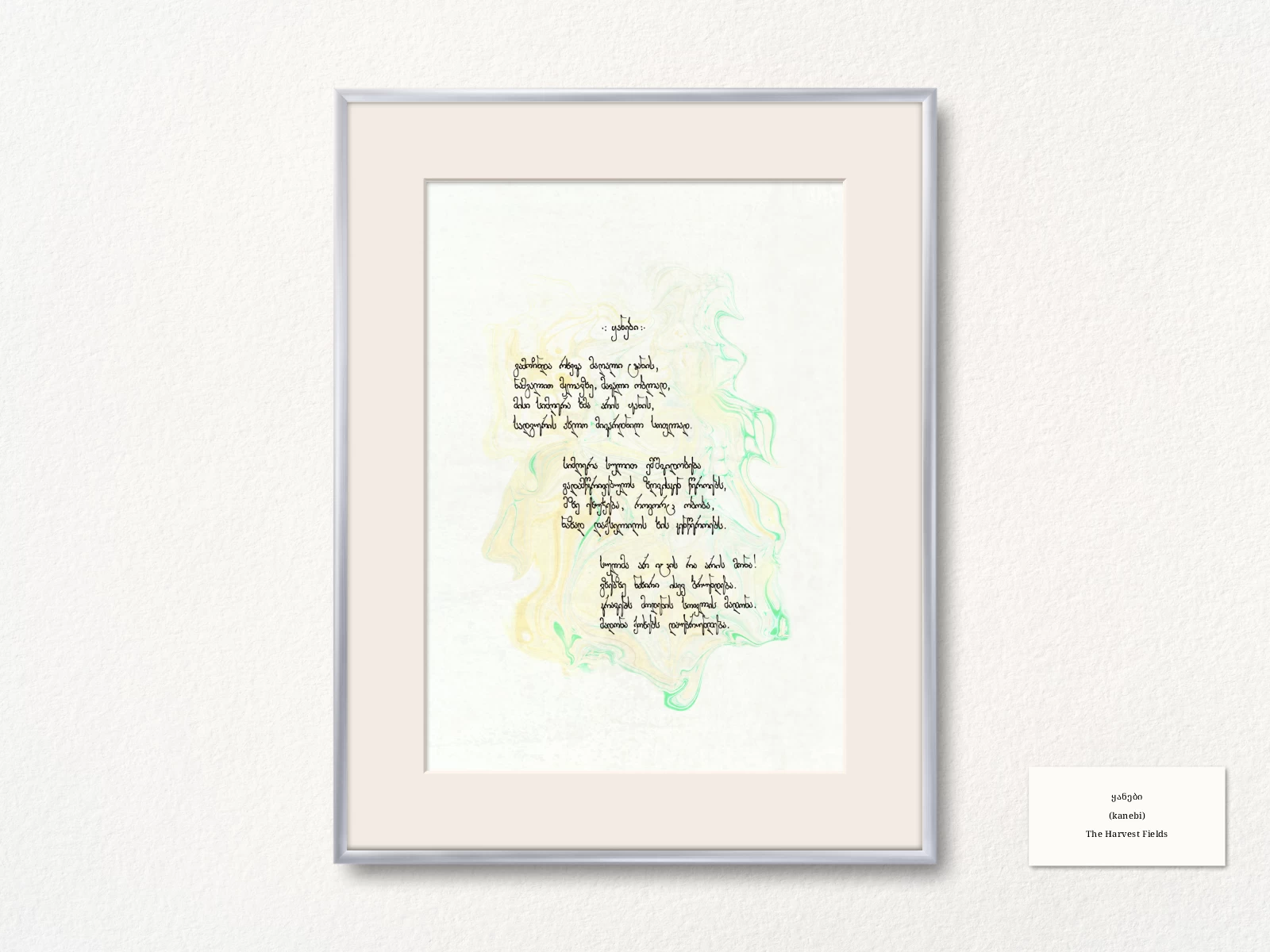
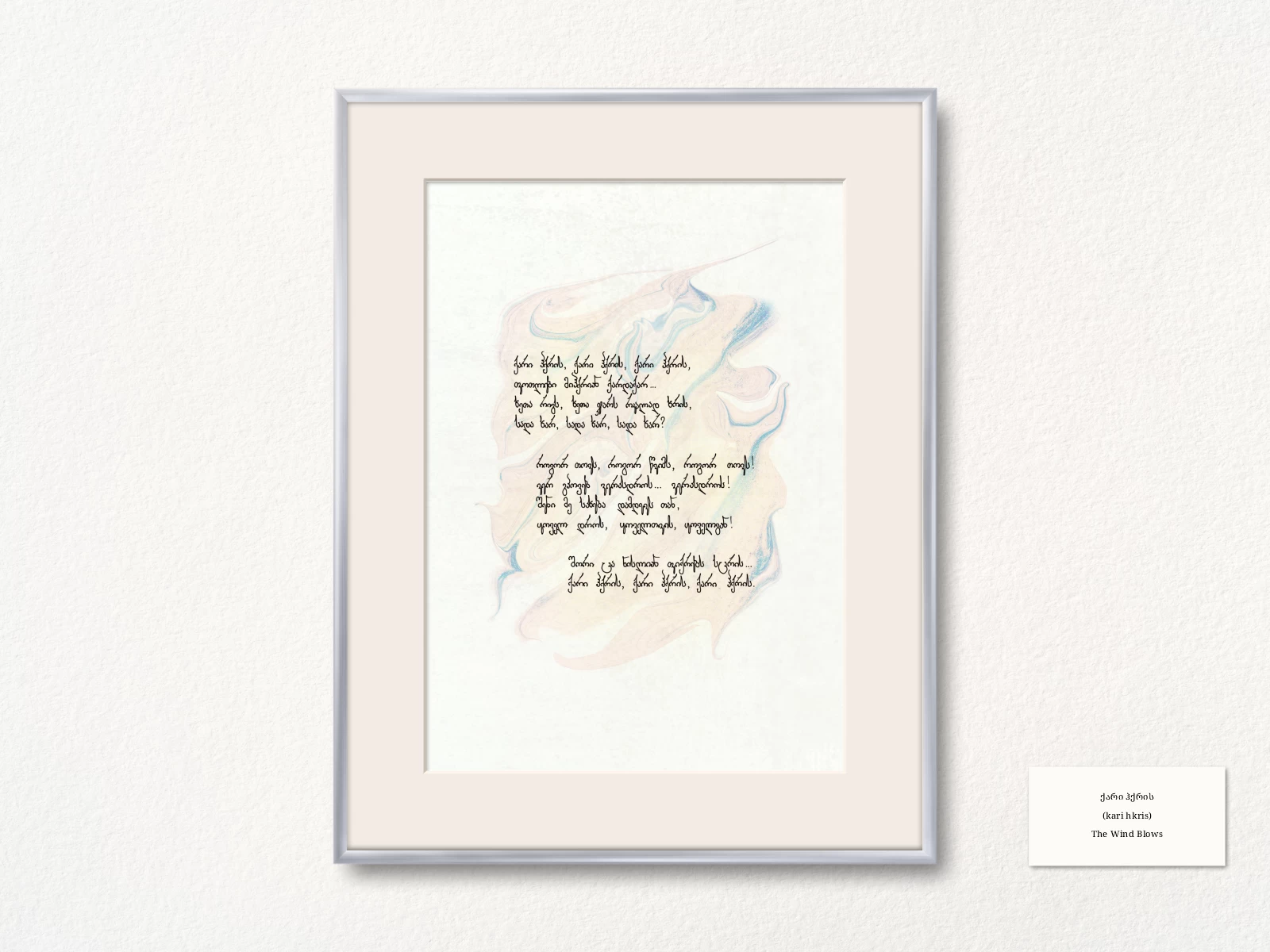
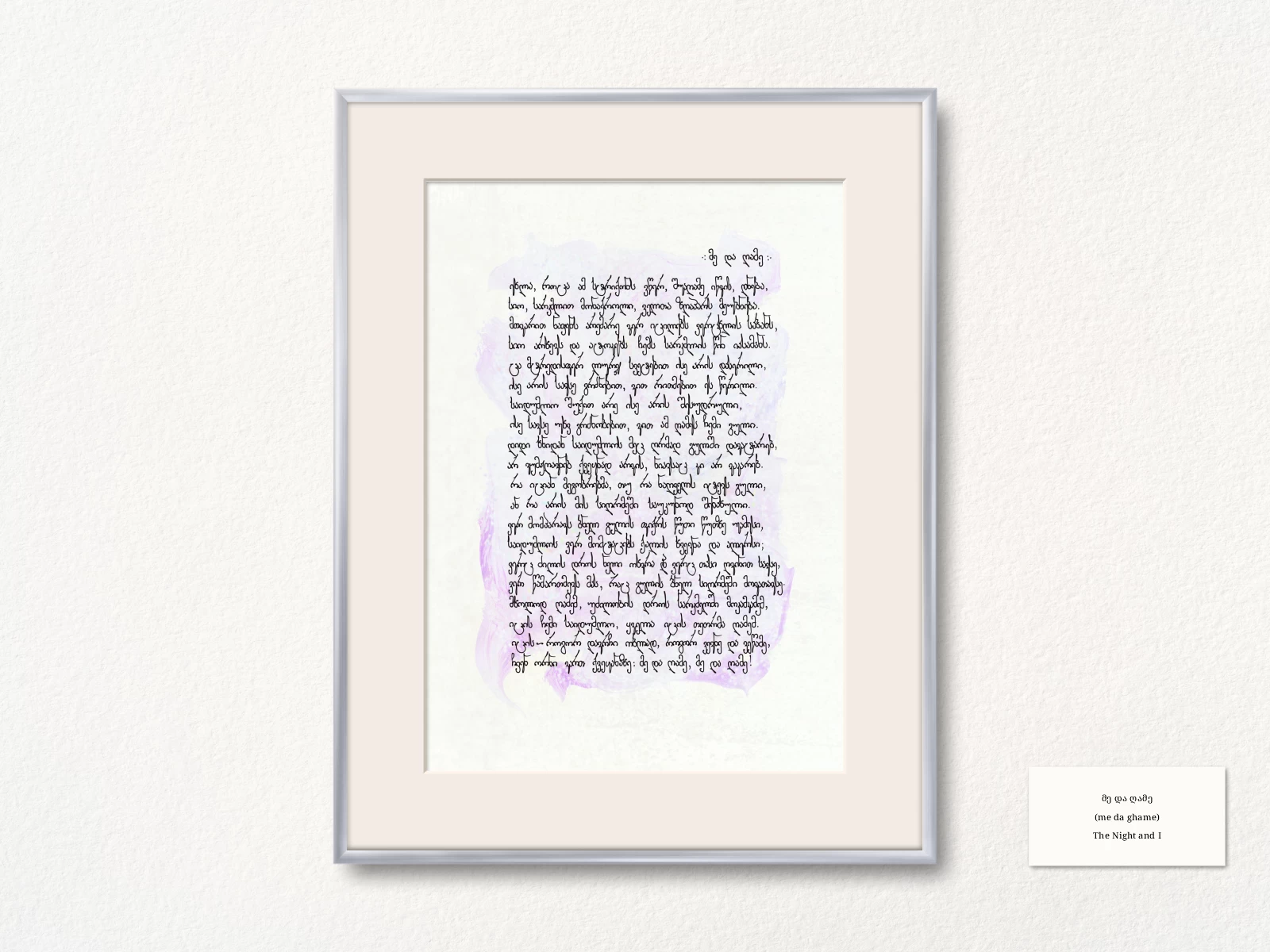
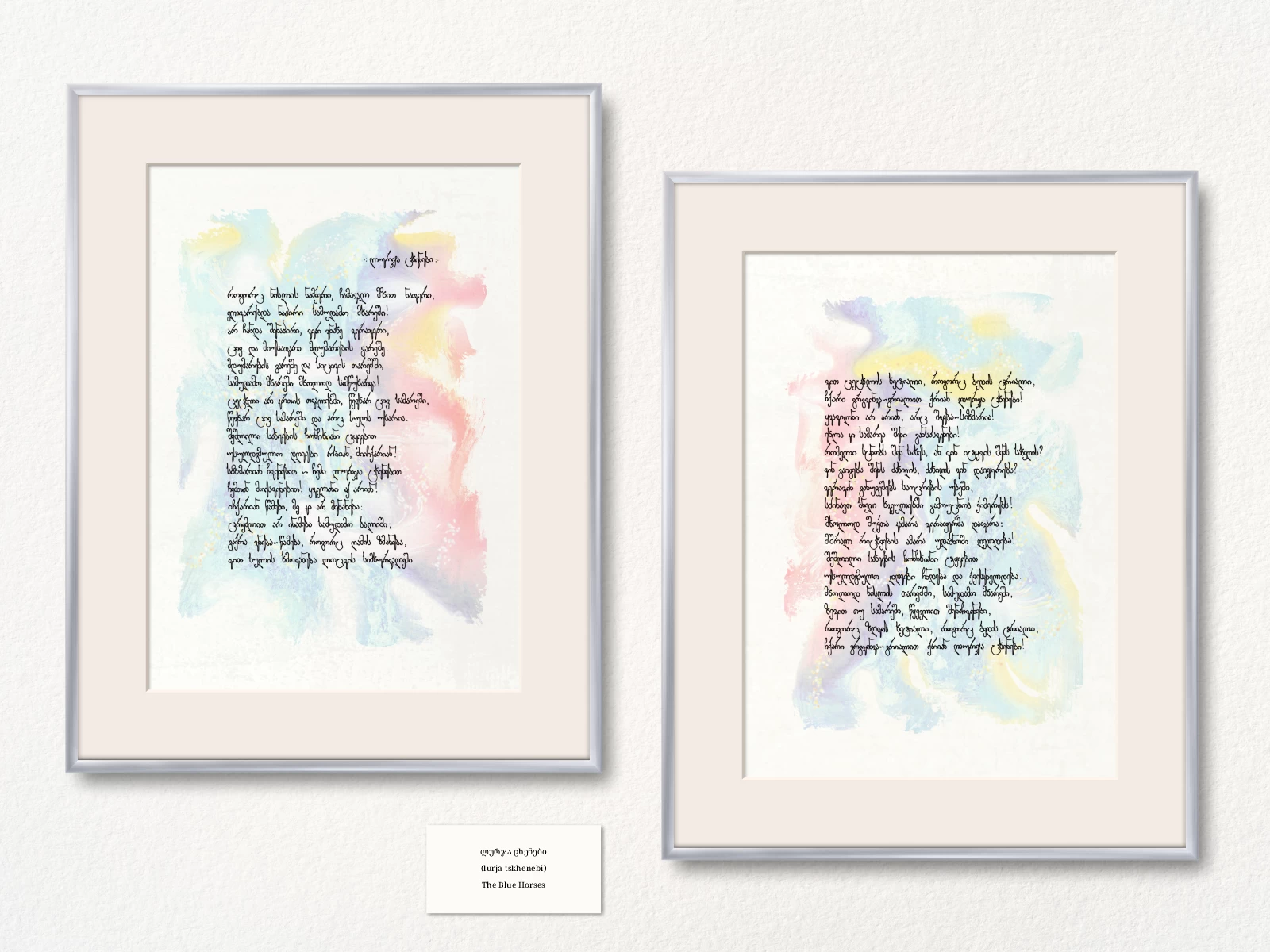
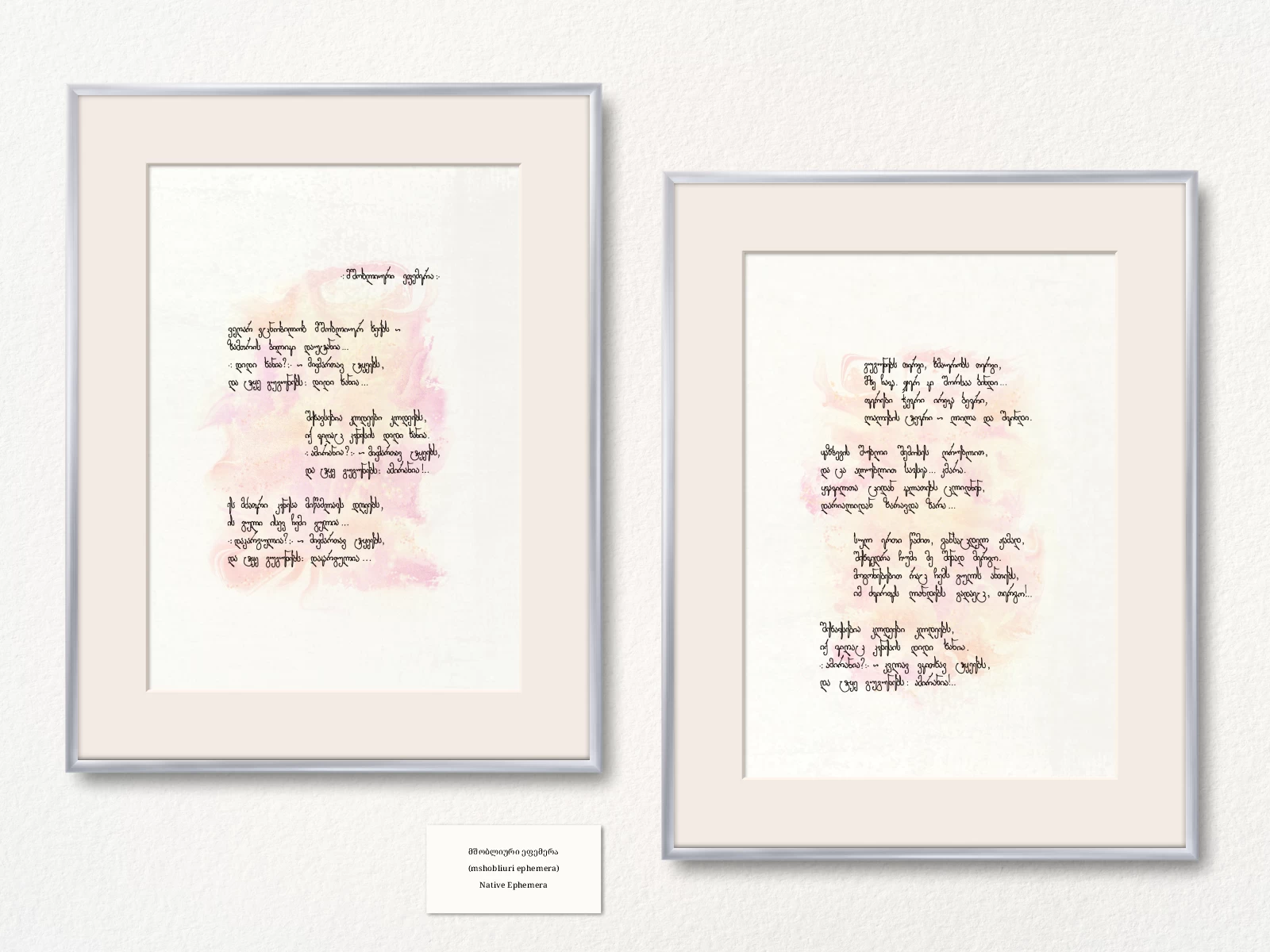
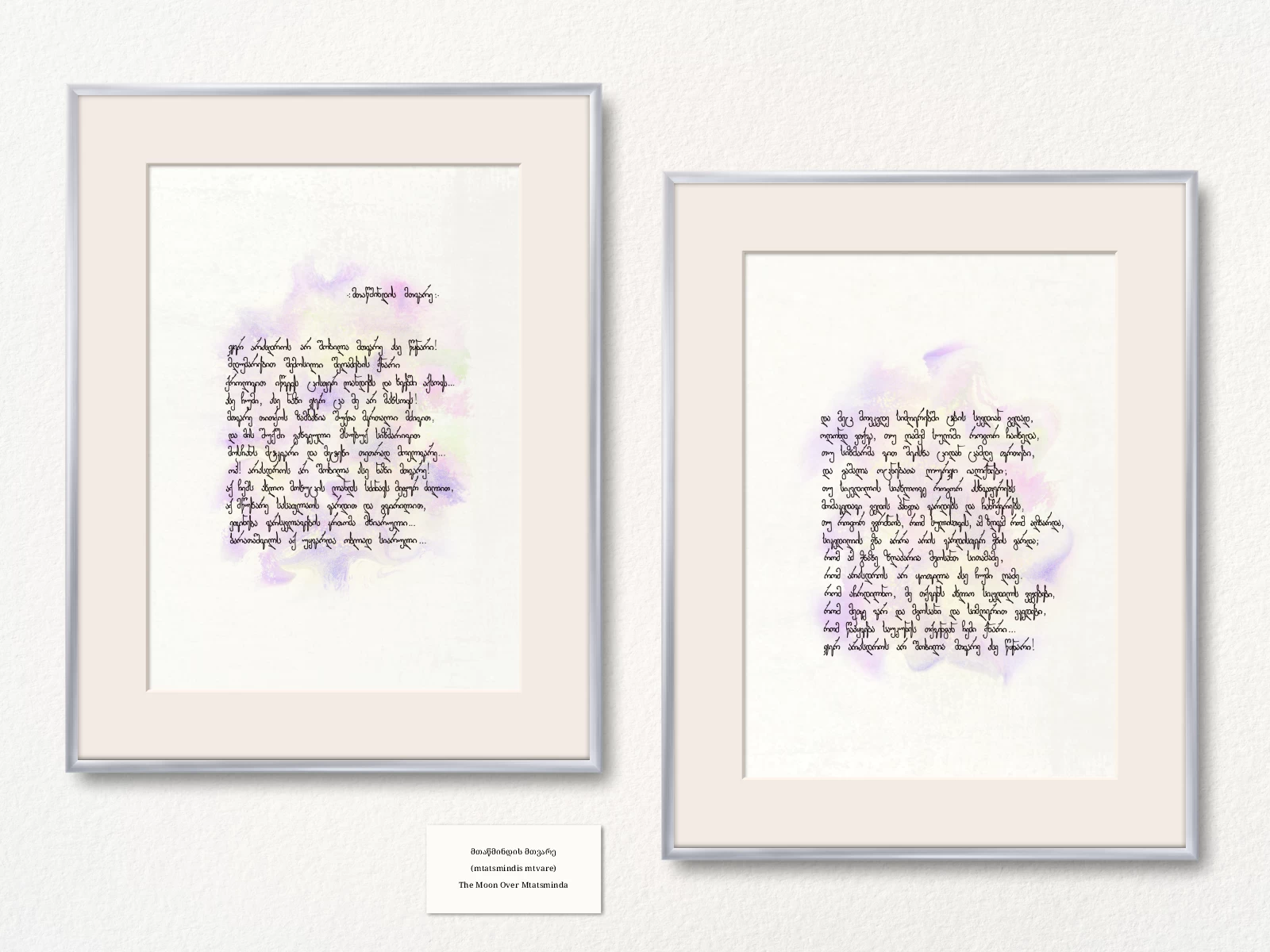
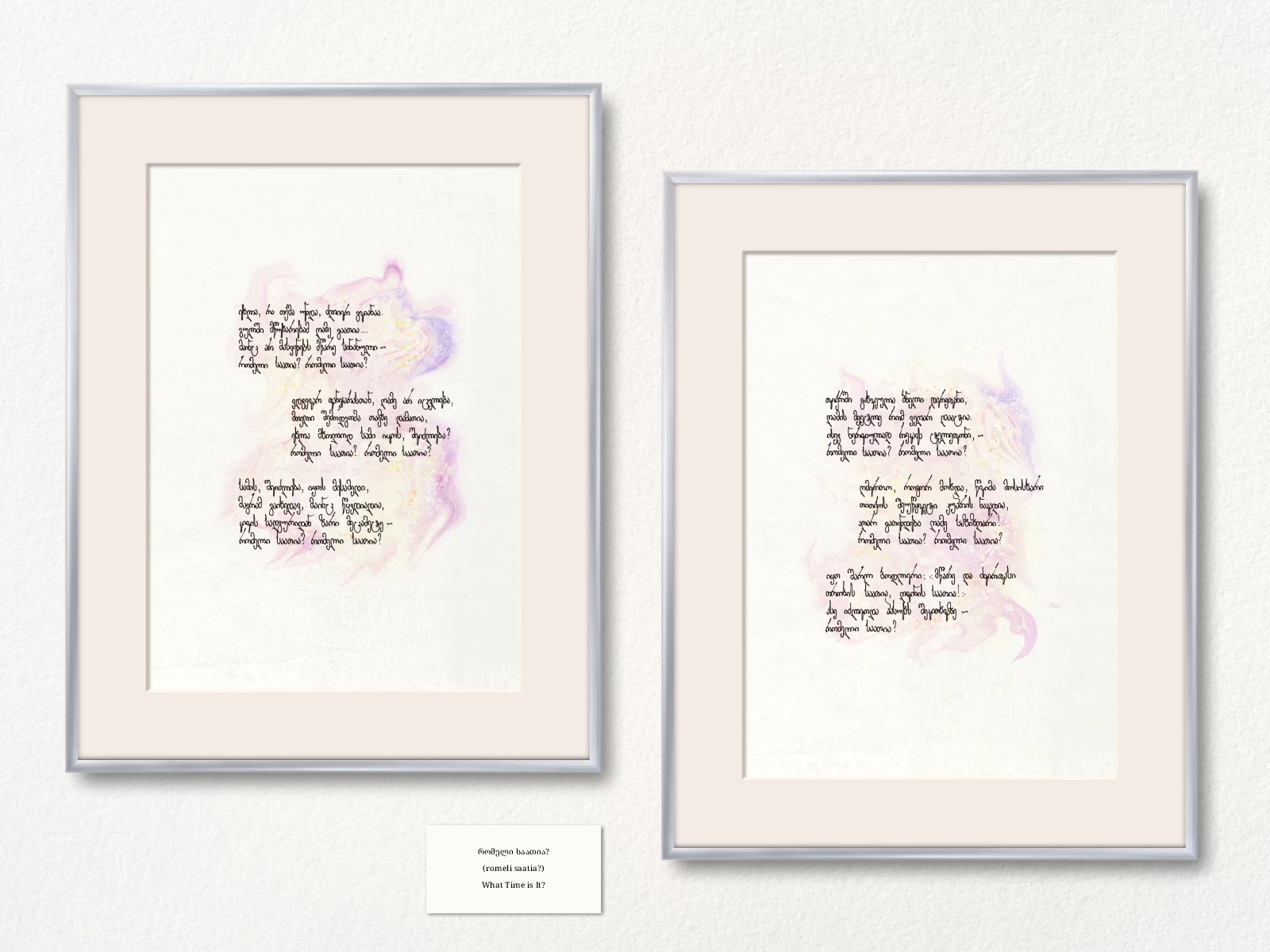
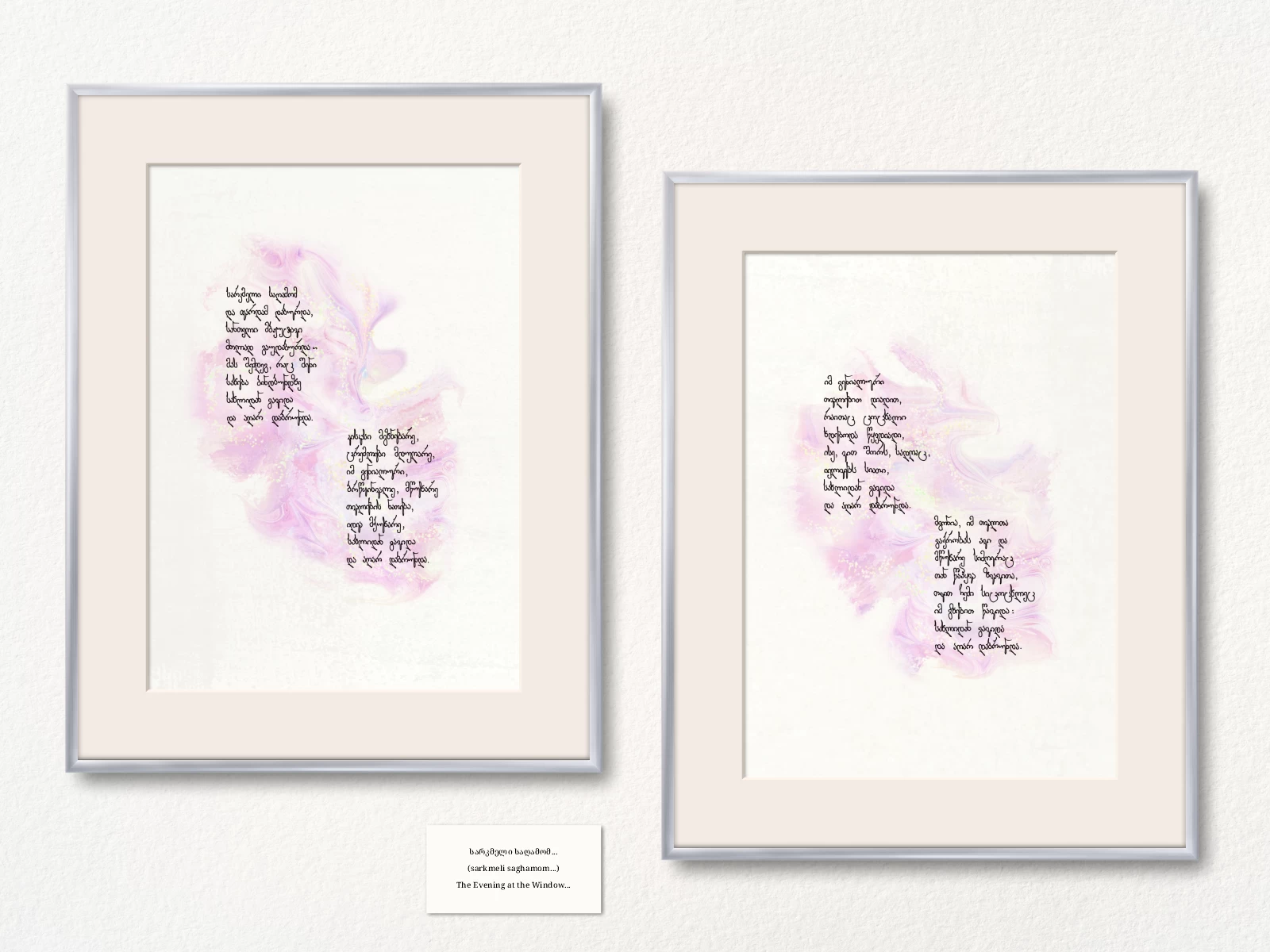
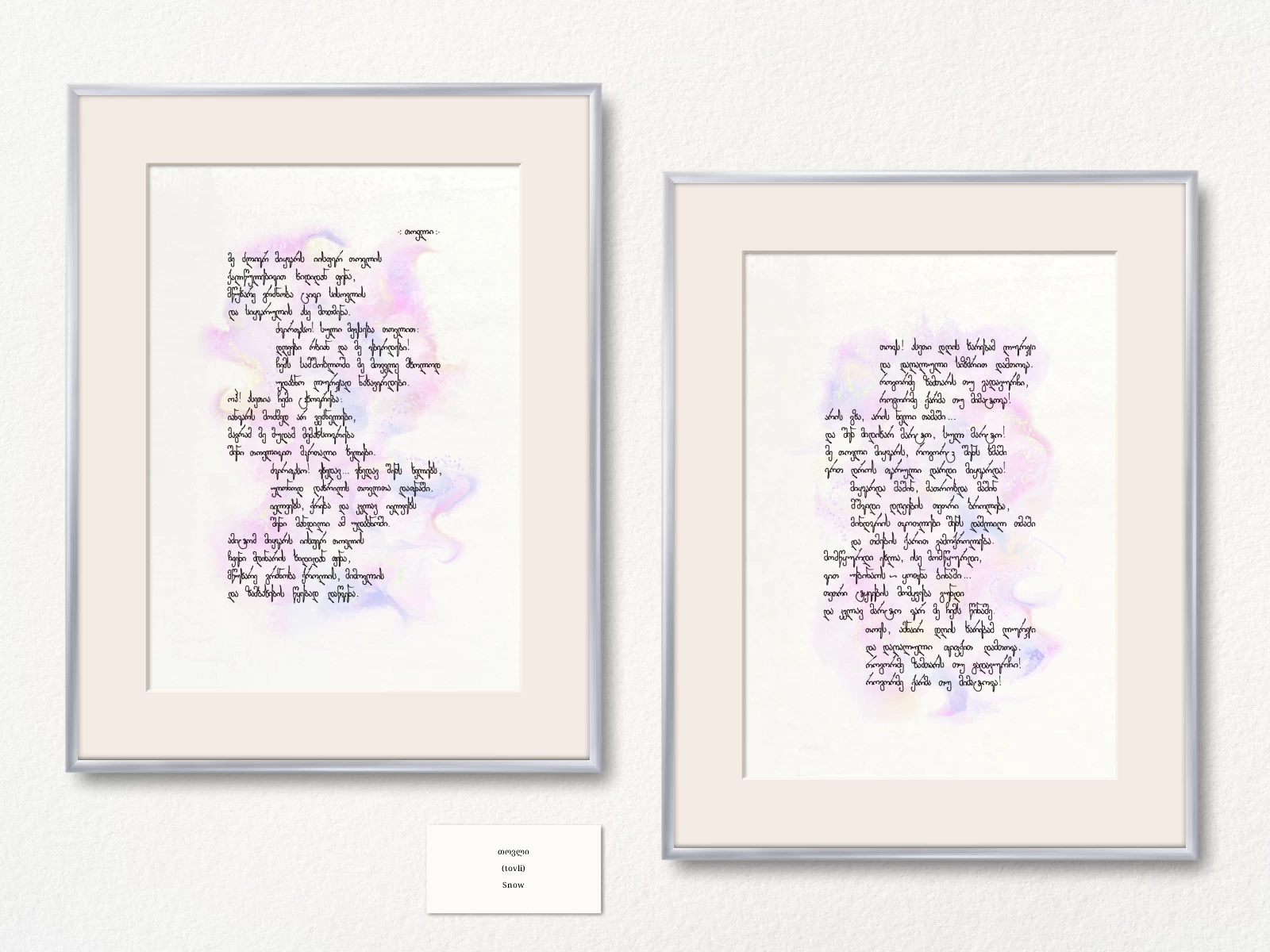
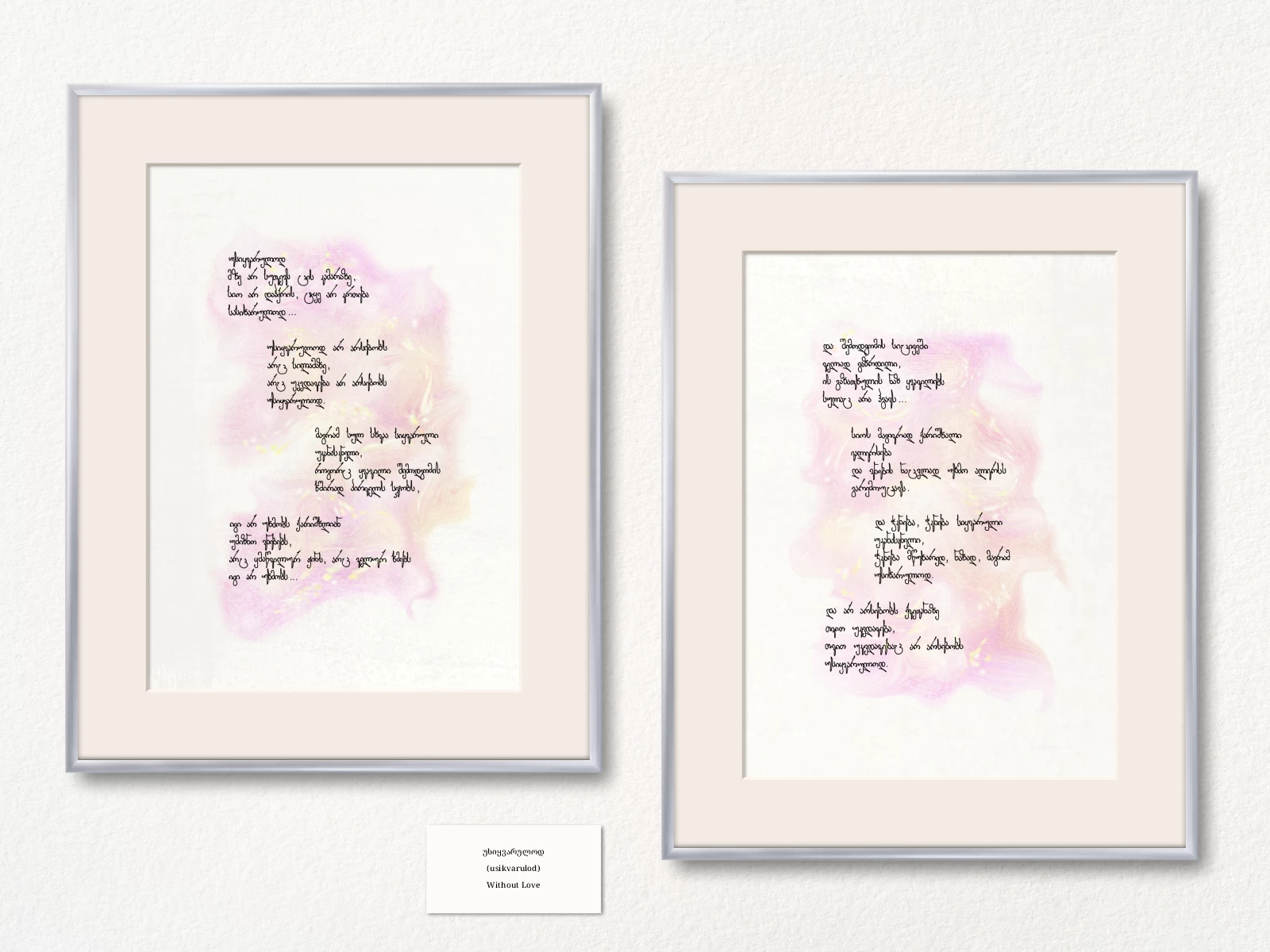
The Creative Process
Through years of experimentation and observation, the artist developed a custom digital pen within a graphic software environment, carefully designed to reproduce the characteristics of the traditional pen used throughout many years of calligraphic practice.
These characteristics include the shape and width of the nib, its angle in the hand, the natural variation of stroke intensity at the beginning and end of each movement, the speed of handwriting, and the changing density of virtual ink deposited across the surface.
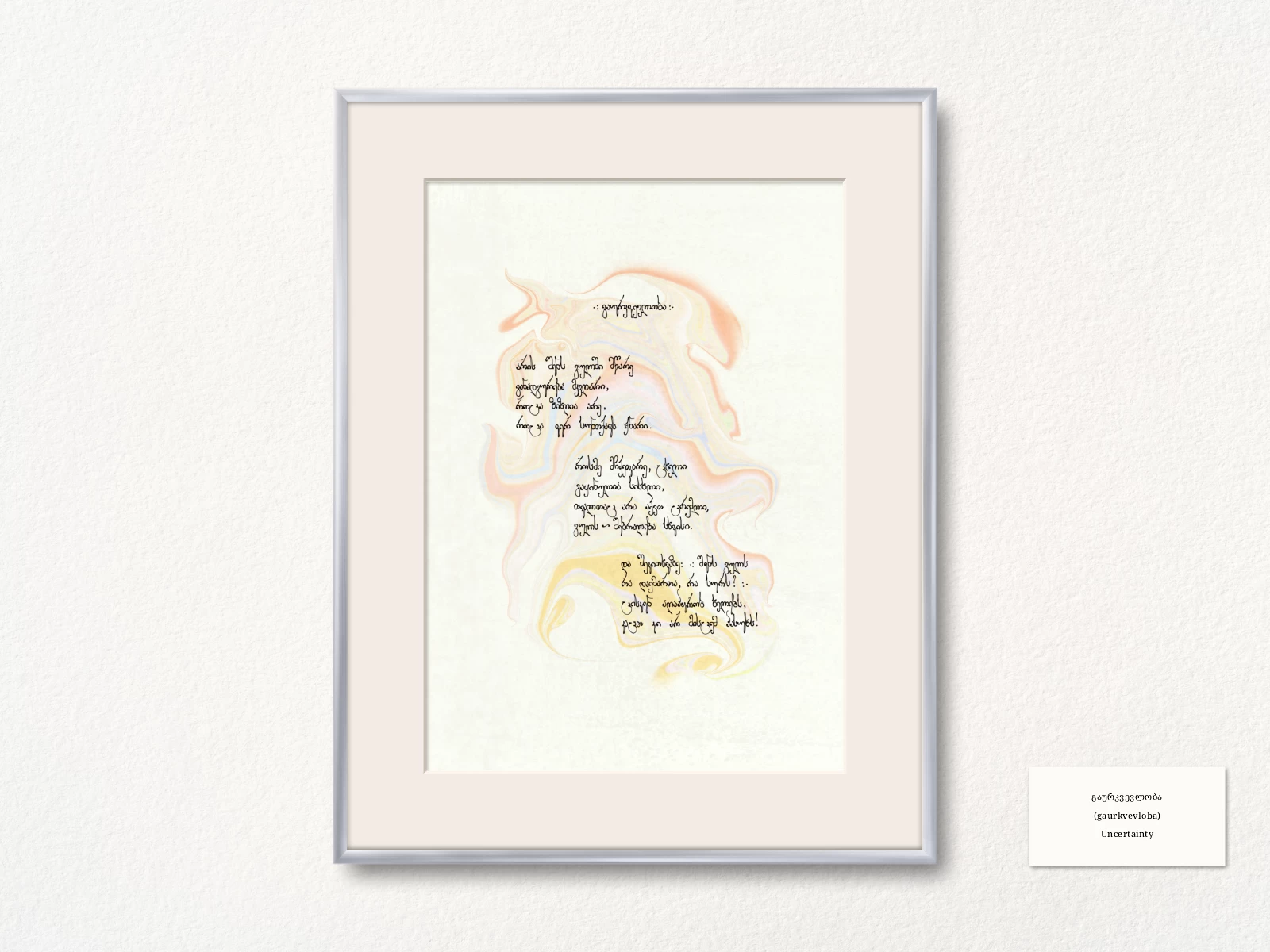
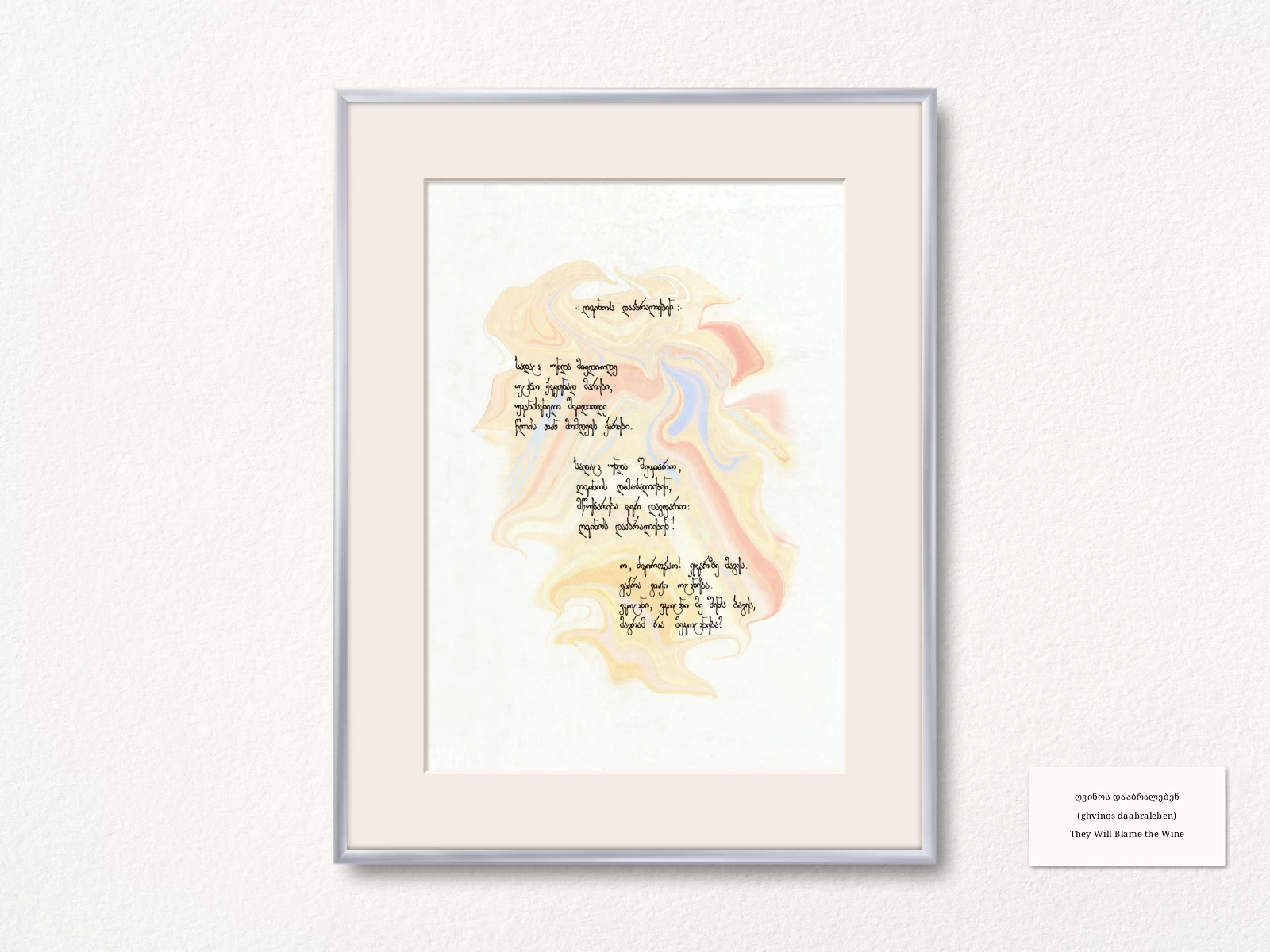
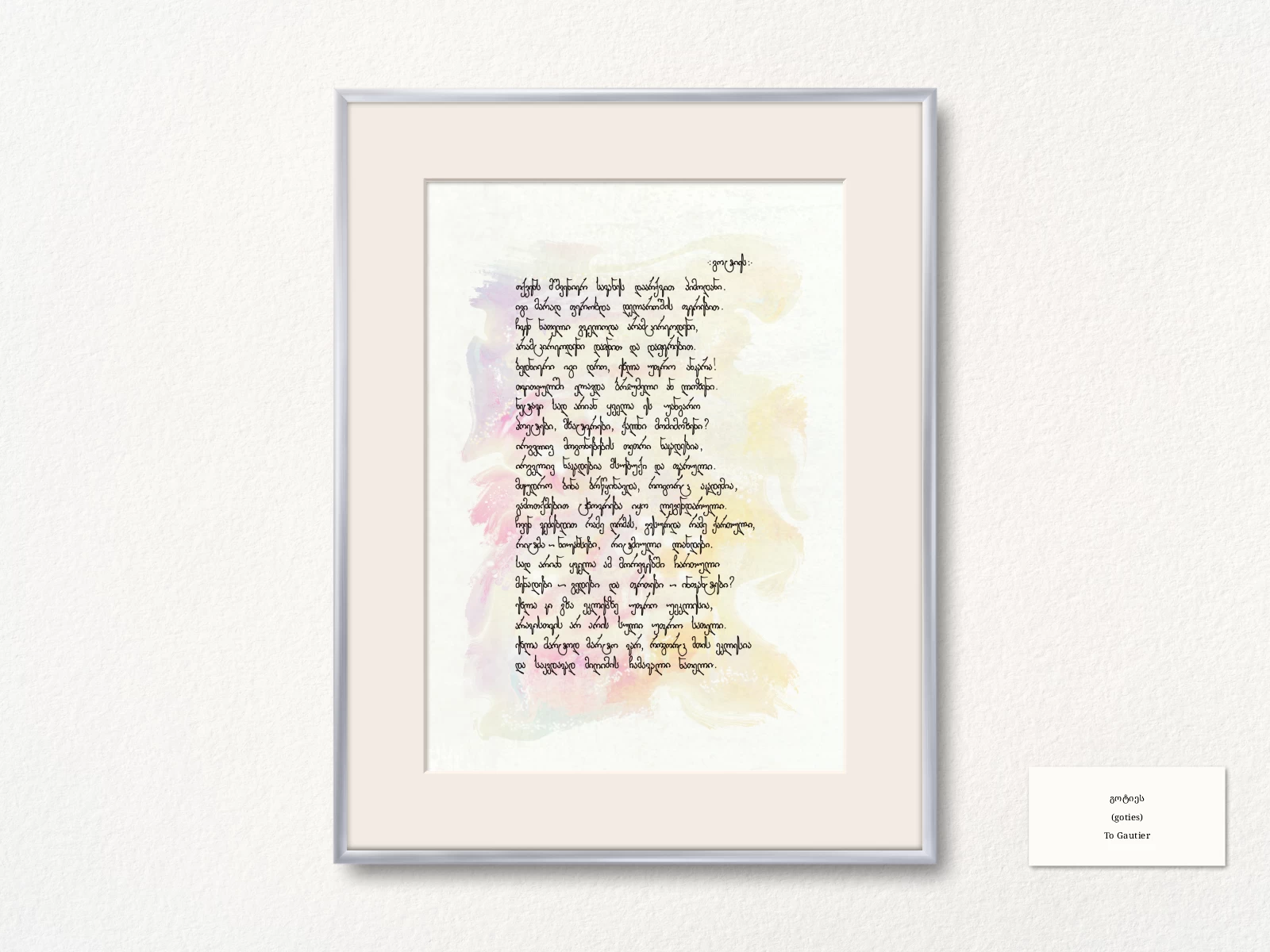
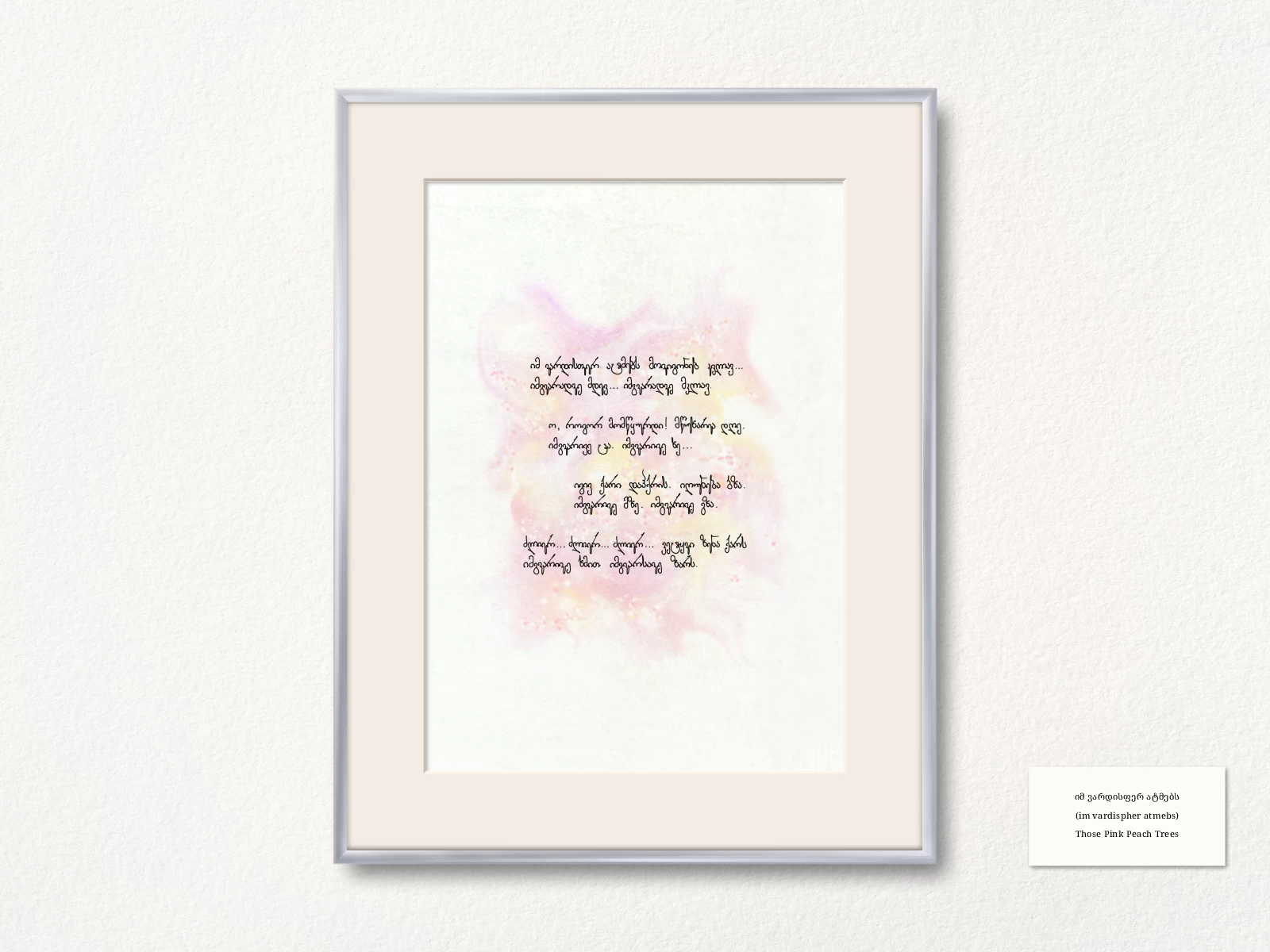
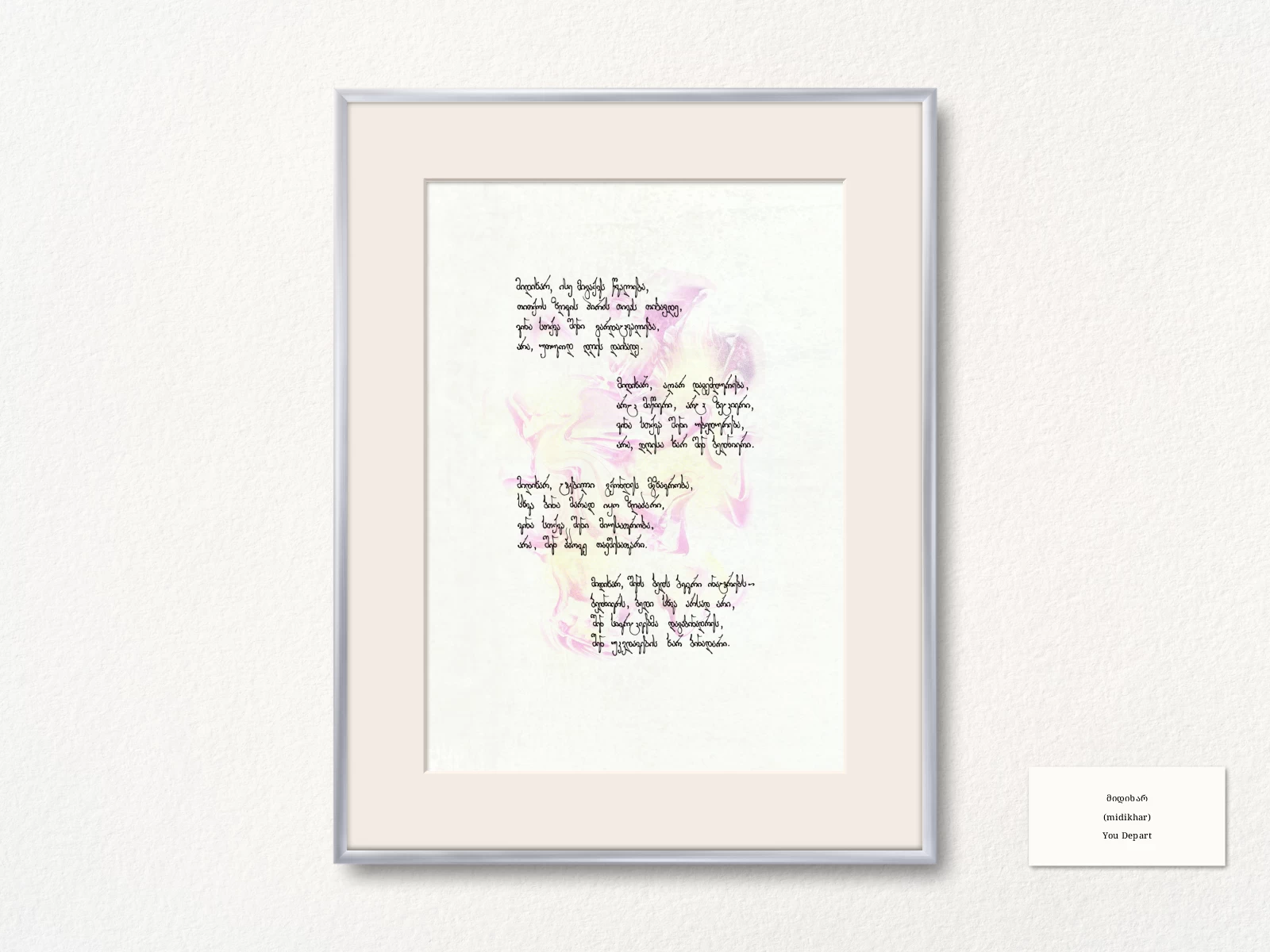
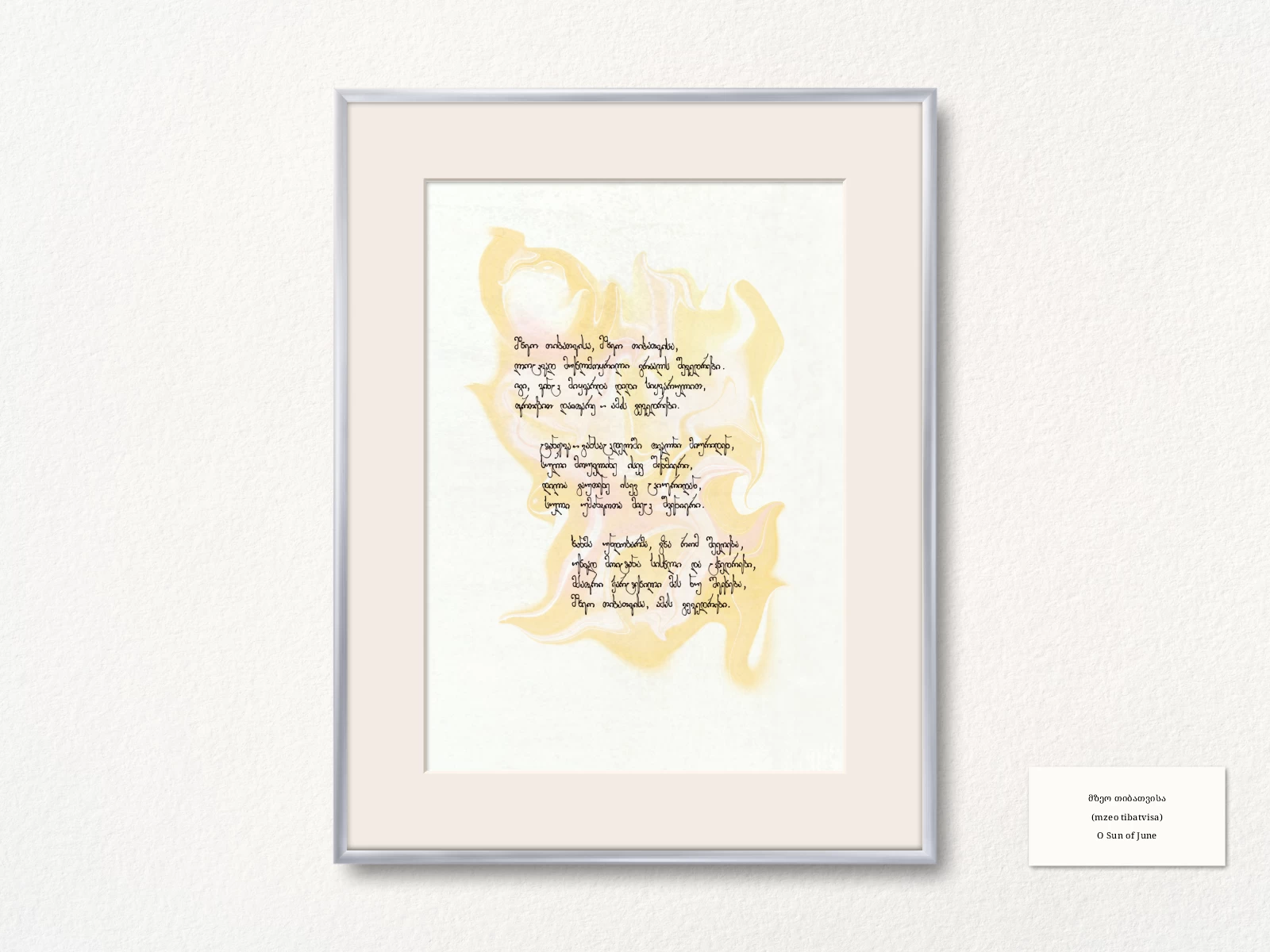
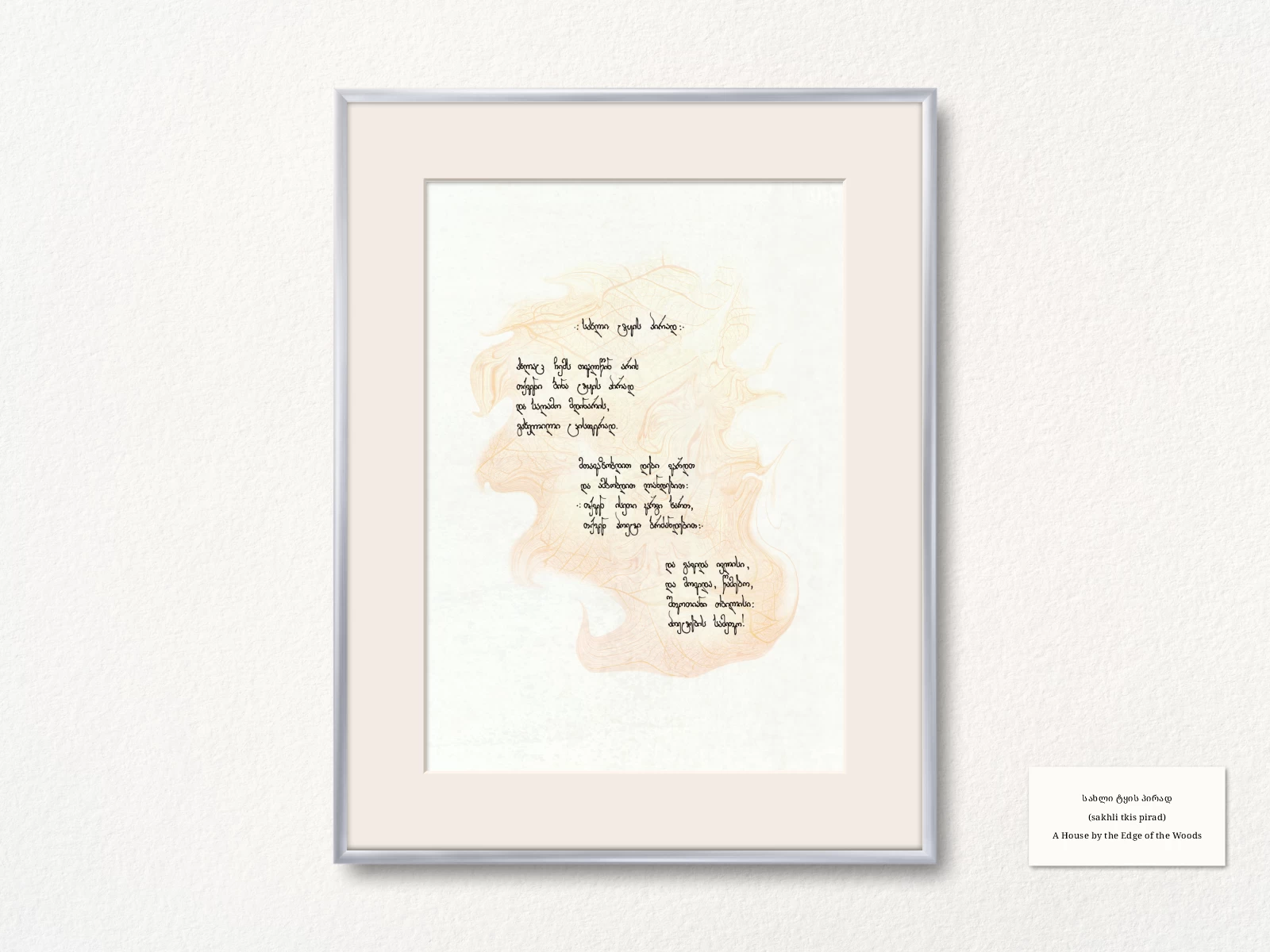
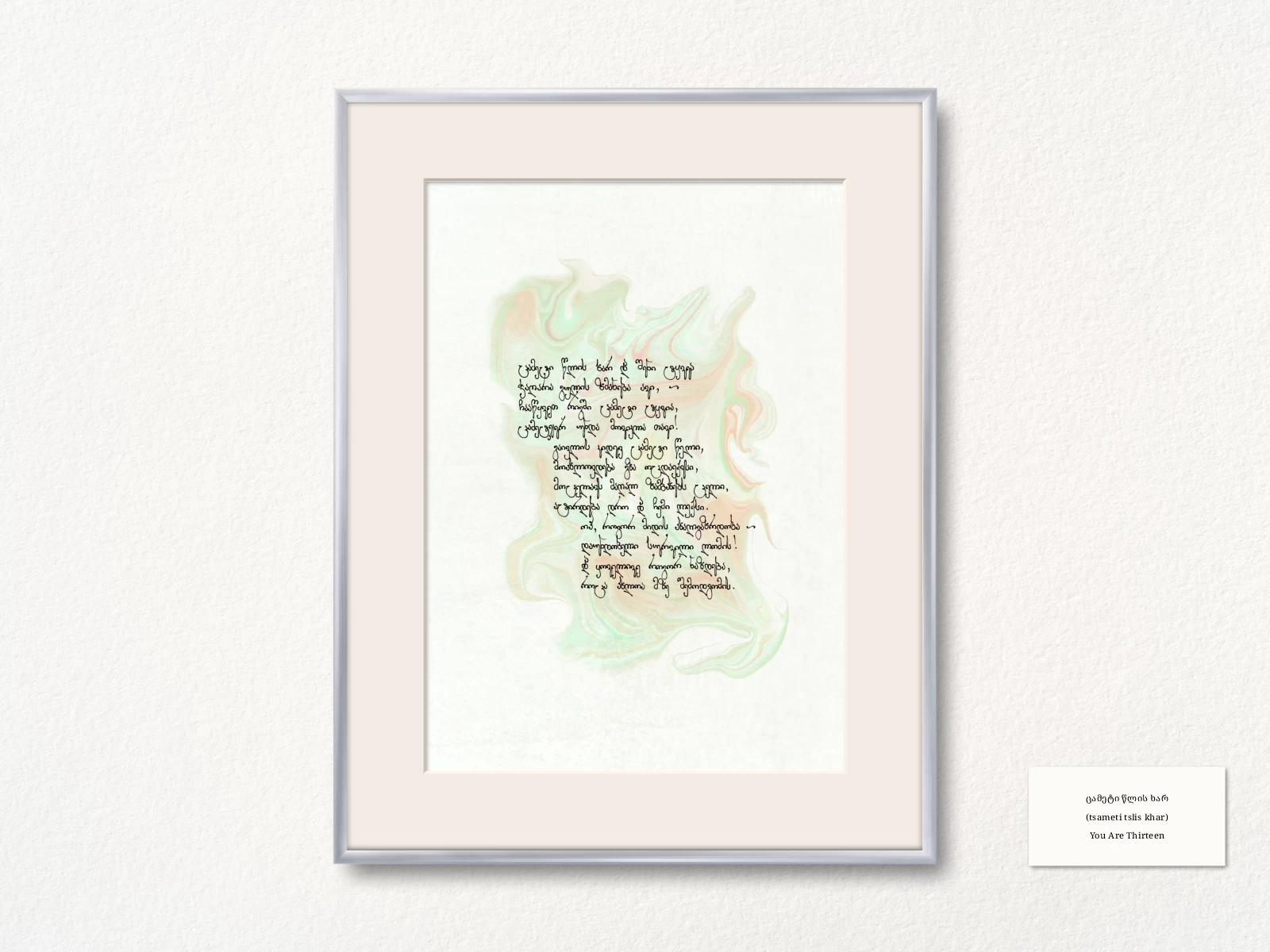
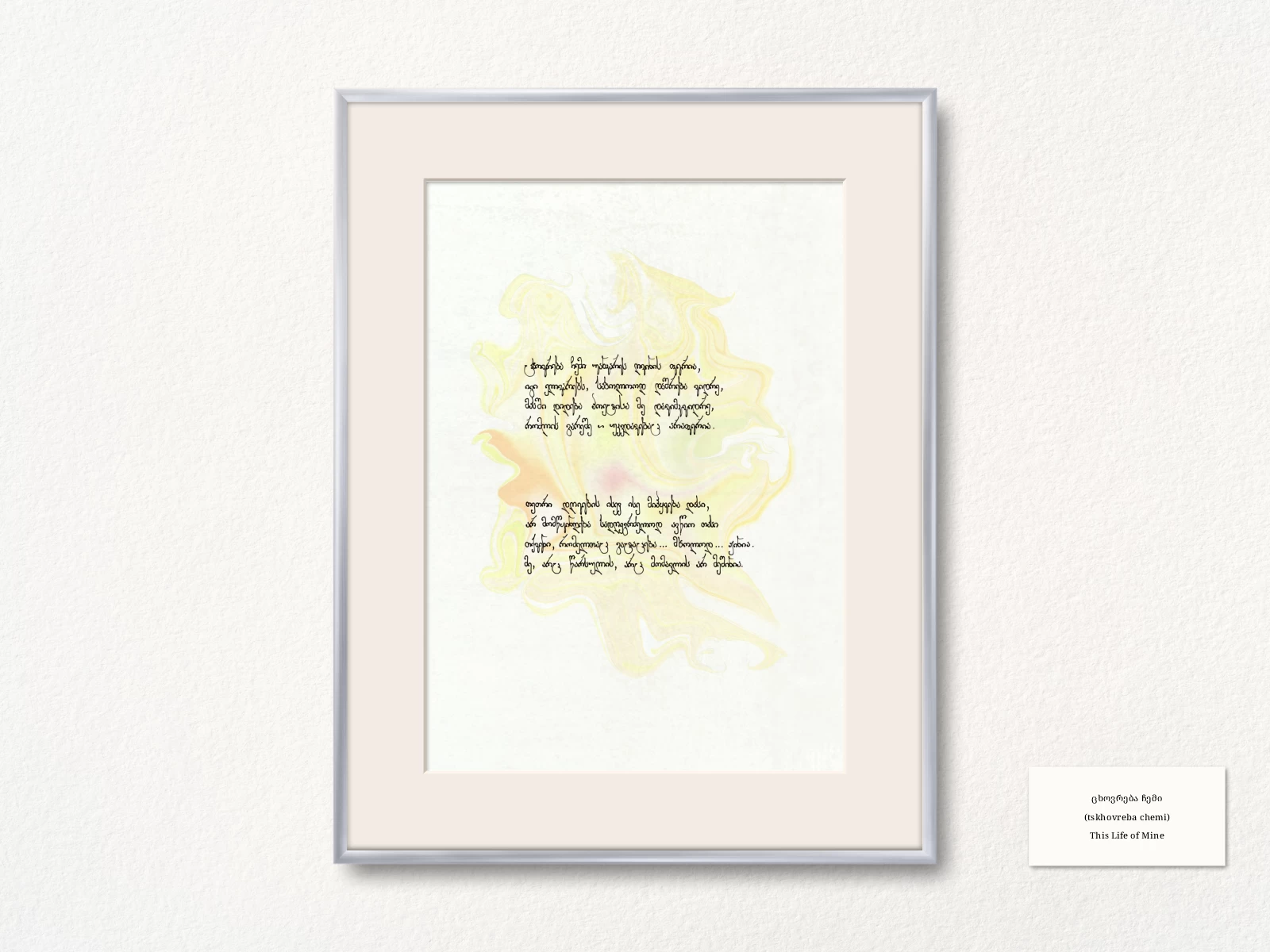
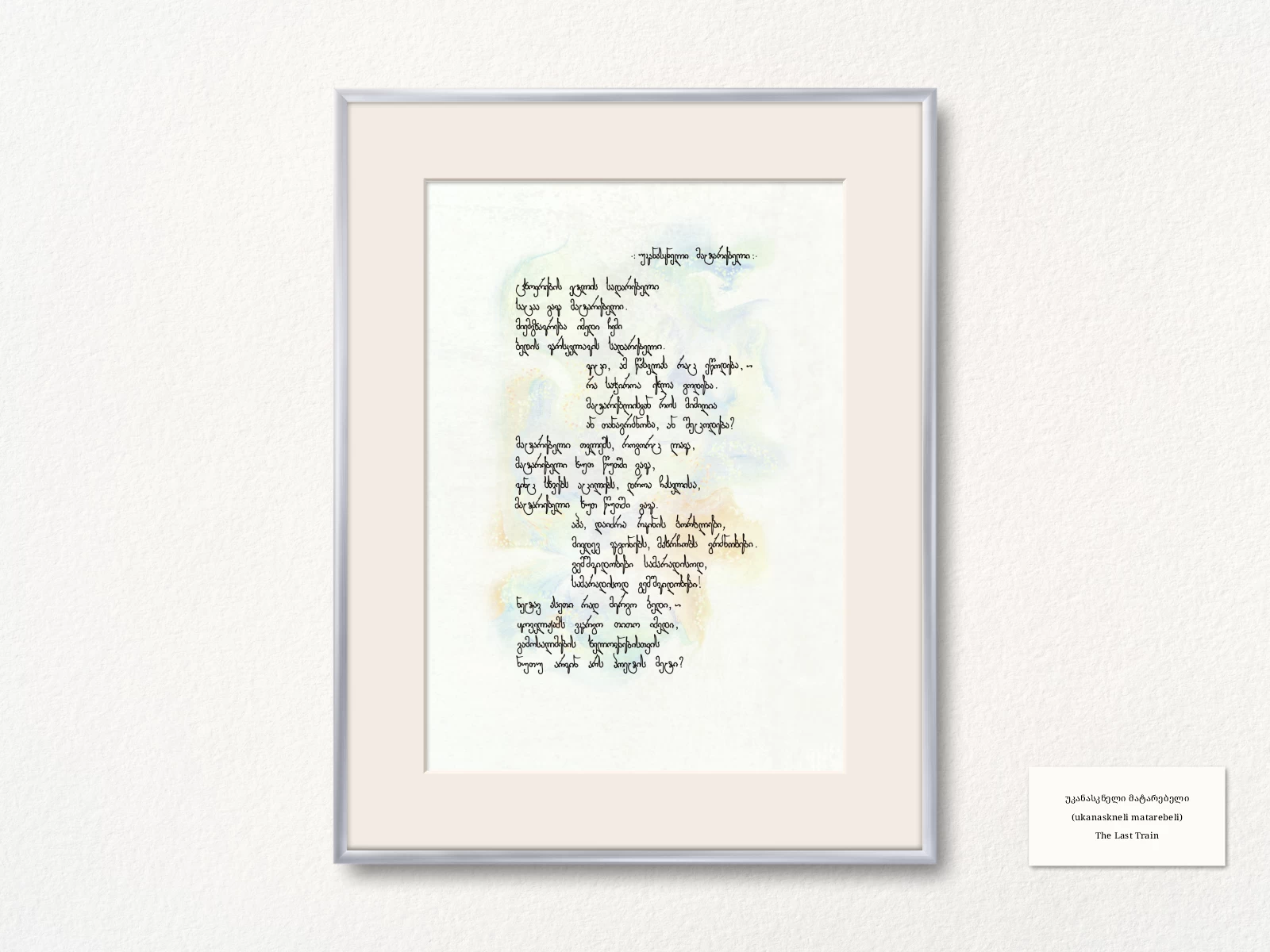
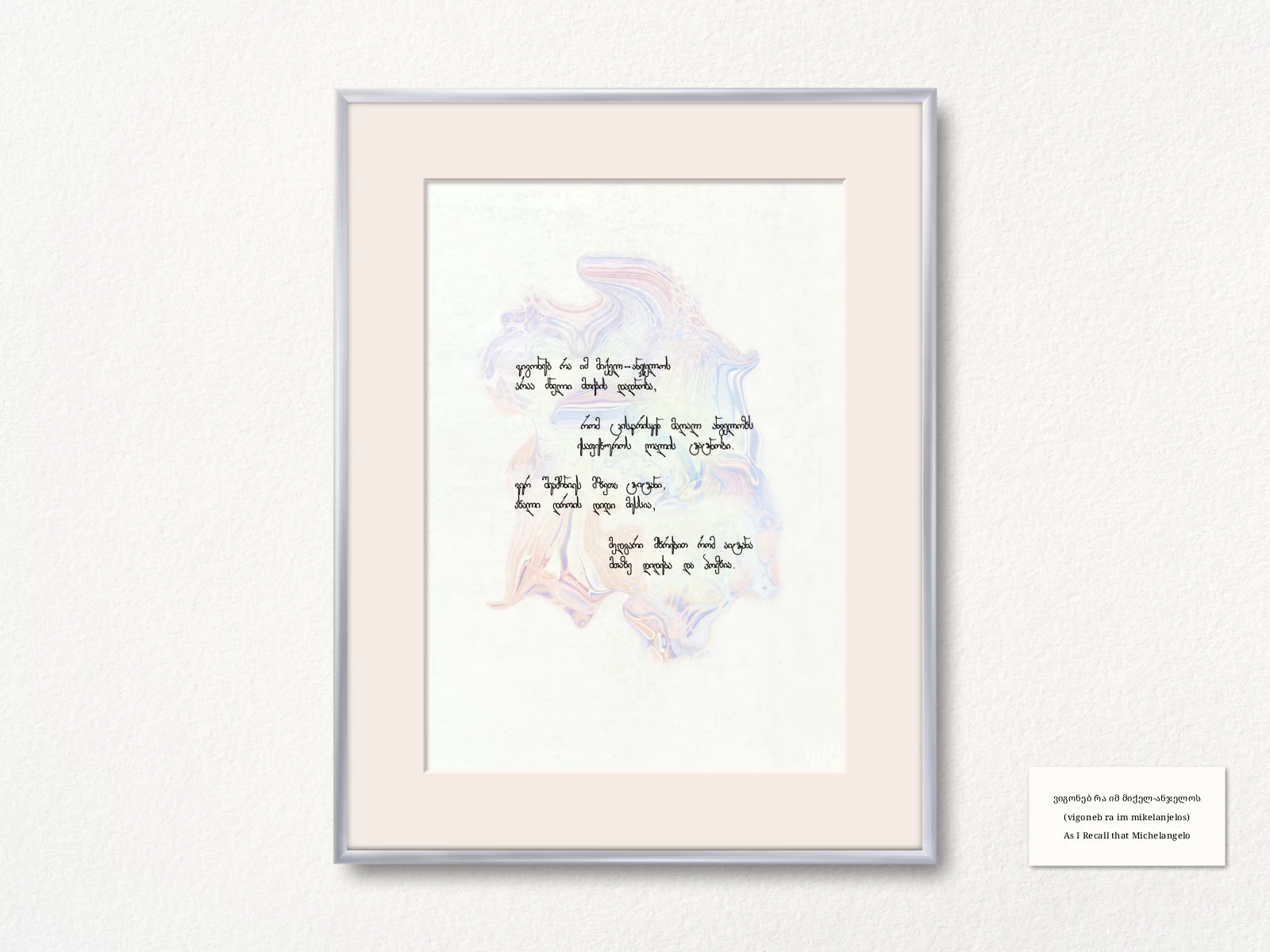
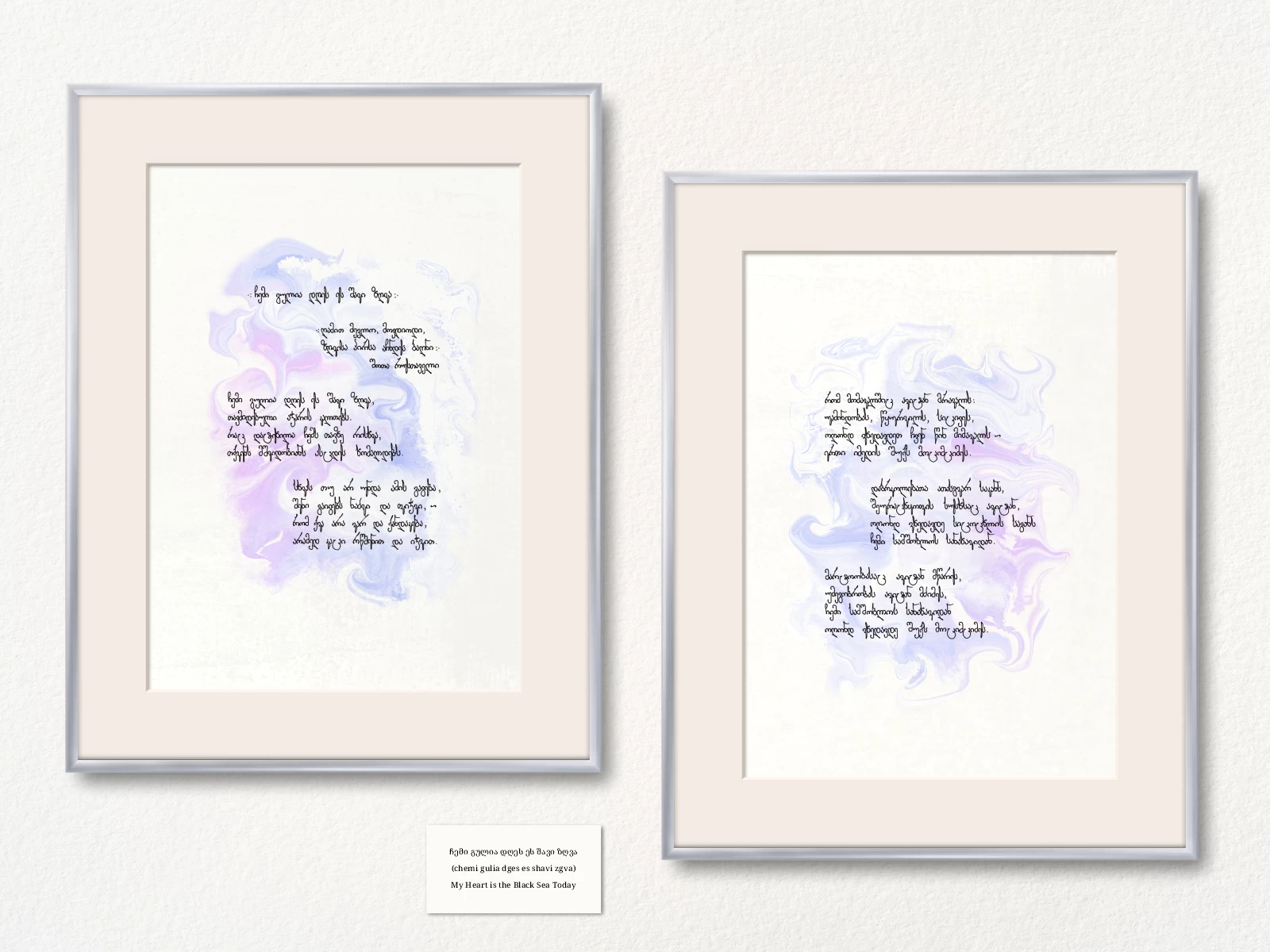
Once this new instrument reached the desired level of expression, it became the foundation for a series dedicated to the poetry of Galaktion Tabidze. Instead of the ornamental initials and decorative motifs traditionally found in Georgian manuscripts, a new expressive element entered the composition — the abstract background.
The forms, textures and colours of these abstract backgrounds are created within the same graphic environment in response to the rhythm, atmosphere and emotional character of each poem. In this way, calligraphy, painterly expression and poetry become united within a single artwork. The creative process remains open to variation as compositions, colours and text placement continue to evolve.
The digital manuscripts are then printed on carefully selected paper using inkjet technology, with translucent inks that closely resemble those of traditional calligraphy. The creative process, however, does not end there. Each print is further enriched with hand-applied watercolour and tempera before undergoing the artist’s own finishing technique, developed many years ago, in which every sheet is individually heated and treated with paraffin.
As a result, every artwork is created using mixed media and continuous artistic variation, giving each sheet its own unique texture and individual character.
Today, most works in the collection are presented in premium-quality aluminium frames. Their slim, neutral design and carefully selected passepartouts do not compete for attention, but instead allow the expressive forms of the manuscript, the beauty of the Georgian script and the poetry itself to remain at the centre of the viewer’s experience.
The Poet Behind the Collection
For generations of Georgians, Galaktion Tabidze (1892–1959) has been far more than a celebrated poet. His verses have become part of the nation’s cultural memory — studied at school, recited at family gatherings, set to music, and rediscovered throughout every stage of life. Admired for their lyrical beauty, emotional depth and extraordinary musicality, his poems remain among the most beloved works of Georgian literature.
Born in the village of Chqvishi in western Georgia, Galaktion grew up surrounded by landscapes, traditions and rhythms that would later echo throughout his poetry. After studying in Kutaisi and Tbilisi, he emerged as one of the leading voices of Georgian literary modernism. His early collections attracted immediate attention, while the landmark volume Crâne aux fleurs artistiques (1919) firmly established him as the defining poet of his generation.
Deeply inspired by European Symbolism, Galaktion admired writers such as Charles Baudelaire, Edgar Allan Poe and Théophile Gautier. Rather than imitating their work, he transformed these influences into a uniquely Georgian poetic voice, creating imagery, rhythm and symbolism unlike anything previously seen in Georgian literature. Several of his poems openly reflect this dialogue with European literature, while remaining unmistakably his own.
Writing during one of the most turbulent periods of Georgia’s history, Galaktion explored themes of love, solitude, memory, nature and the inner life of the individual. The Soviet era brought censorship, political persecution and profound personal loss, including the arrest and exile of his wife, Olga Okujava. These experiences deepened the emotional resonance of his later poetry, where beauty and sorrow often exist side by side.
Although his poems have been translated into many languages, readers often remark that something essential remains impossible to carry across. The unique sound of the Georgian alphabet, the musical rhythm of his verse and the delicate relationship between written form and spoken language belong inseparably to the original. Reading Galaktion in Georgian is therefore not only a literary experience, but also an encounter with the visual and musical character of one of the world’s oldest living alphabets.
Today Galaktion Tabidze is honoured as the "King of Poets" in Georgia. His works continue to inspire readers, musicians, painters and calligraphers, while his final resting place in the Mtatsminda Pantheon overlooks the city of Tbilisi that shaped so much of his life and imagination. His poetry remains a living part of Georgia’s cultural identity, connecting generations through language, memory and art.
This collection pays tribute to that enduring legacy through contemporary Georgian calligraphy. Each artwork brings together literature, visual art and traditional craftsmanship, offering not an illustration of a poem, but a visual interpretation of its atmosphere and spirit. For many international visitors, this collection may become a first encounter with Galaktion Tabidze — and an invitation to discover the beauty of Georgian poetry through its original script.