
From the Artist
Creation History for the 1991 Manuscript
In the summer of 1991, I was 25. I continued my revival work on Georgian calligraphy. Hope filled the air, but tension grew stronger.
The new government functioned relatively well after the October 1990 multiparty elections. Yet internal disagreements surfaced quickly. Conflicts arose over cadre policy. Several key ministers resigned in August. Political friction increased steadily. By the end of the year, it led to open confrontation.
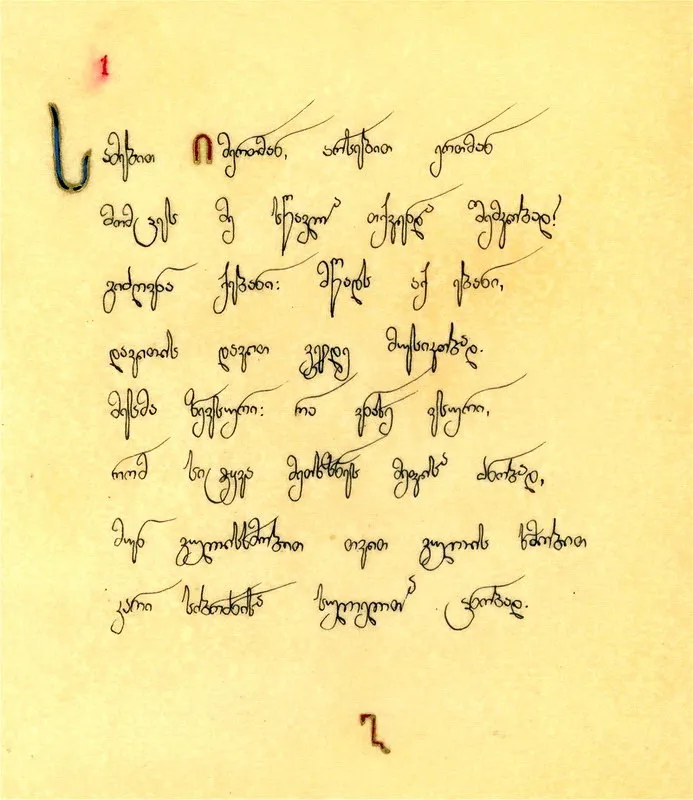
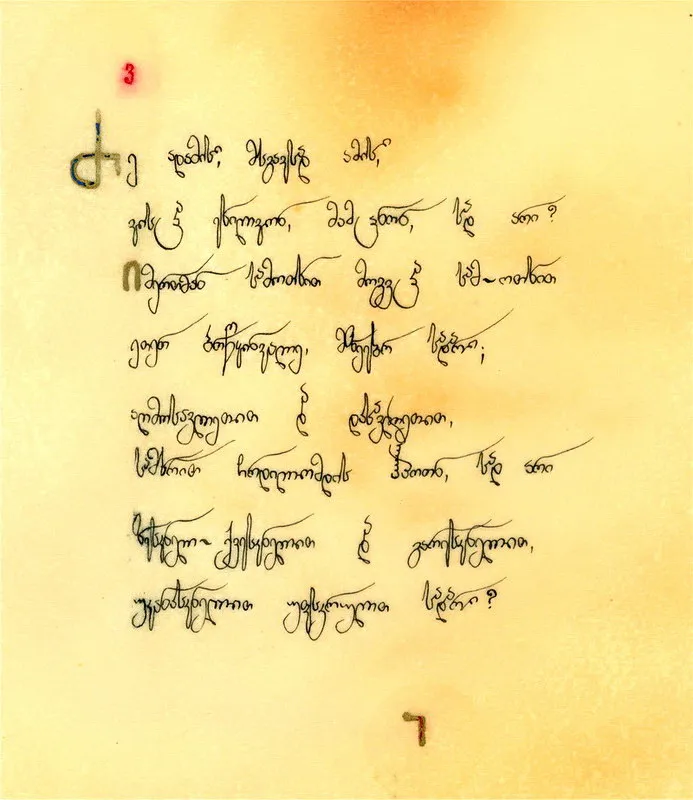
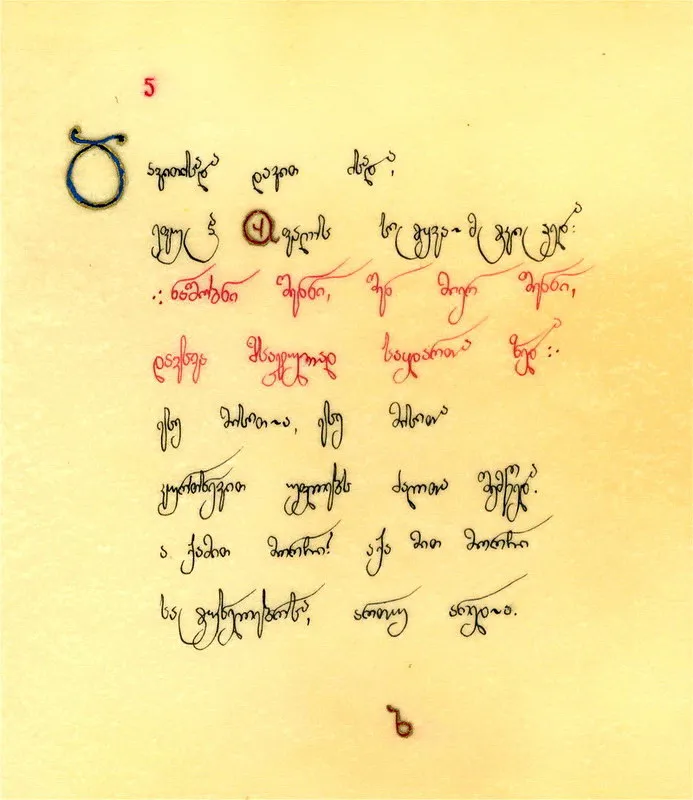
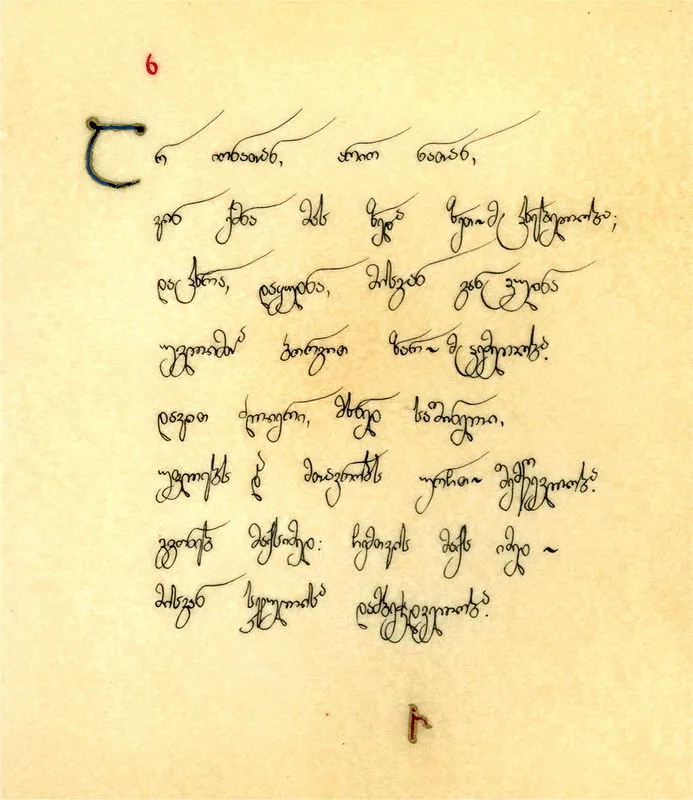
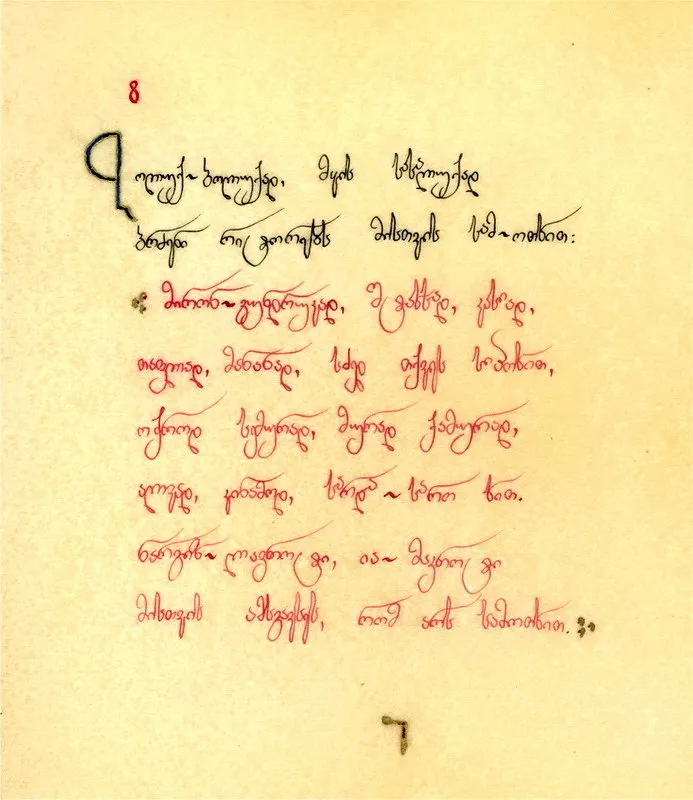
In this atmosphere of transition and spiritual rediscovery, I turned to “Abdulmesiani” by Ioane Shavteli. This panegyrical poem praises Queen Tamar and David Soslan. It celebrates the victory at the Battle of Basiani in 1203. The work glorifies a strong, divinely ordained monarchy.
The unusual rhythm and intricate poetic structure drew my attention most. Short lines and strong rhyming create a musical effect. The tone feels more formal and courtly than Rustaveli’s “The Knight in the Panther’s Skin”. Yet it offers a fascinating glimpse into medieval royal culture and erudition.
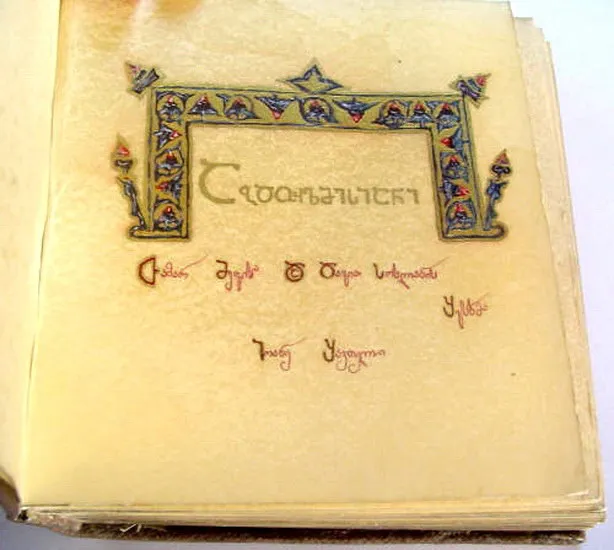
I recreated “Abdulmesiani” in a handwritten book in 1991. I wanted to revive classical Georgian calligraphy. I also aimed to highlight a lesser-known gem of medieval Georgian literature. This work reveals the intellectual openness and artistic refinement of the Tamar-era court.
This manuscript became the second foundational revival book. It blended personal artistic exploration with the broader cultural resurgence of the time.
Technical Details and Binding Method
No instructional resources existed. I again relied on direct study of historical reproductions.
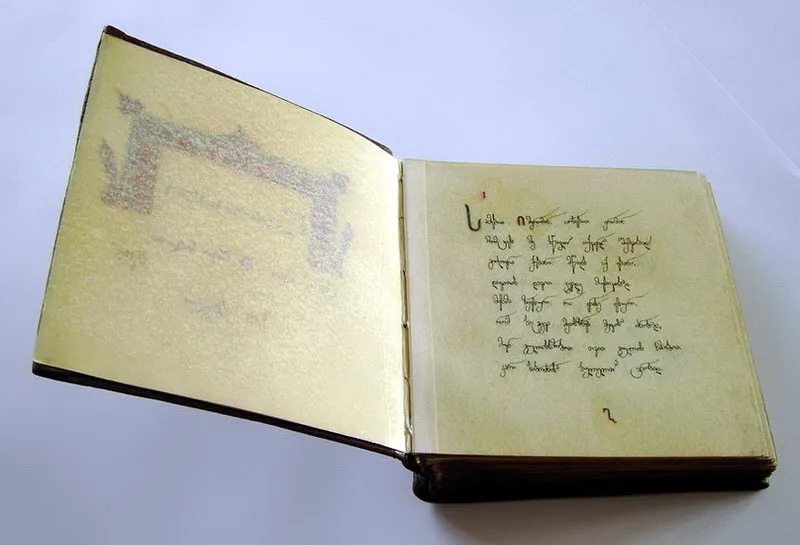
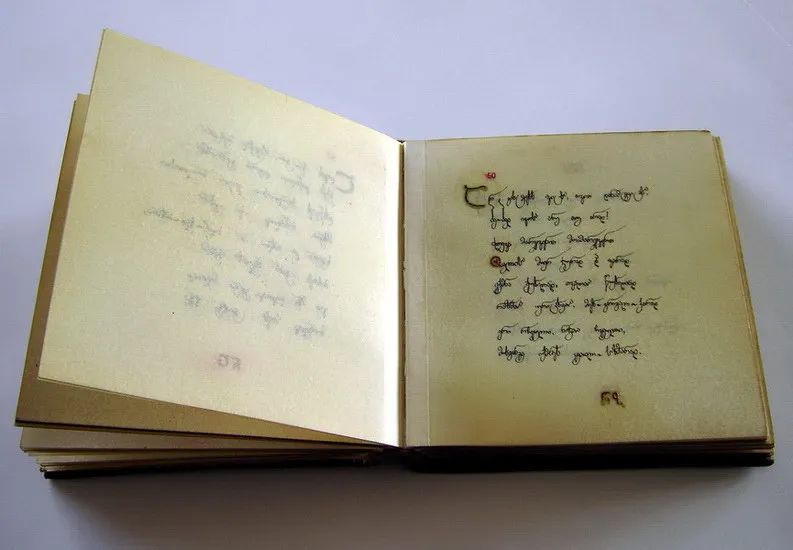
I executed the manuscript on one side only. I used thick drafting paper as the base material. After finishing the writing and illumination, I applied my self-developed paraffin wax treatment to the pages. This protected the ink from fading and moisture.
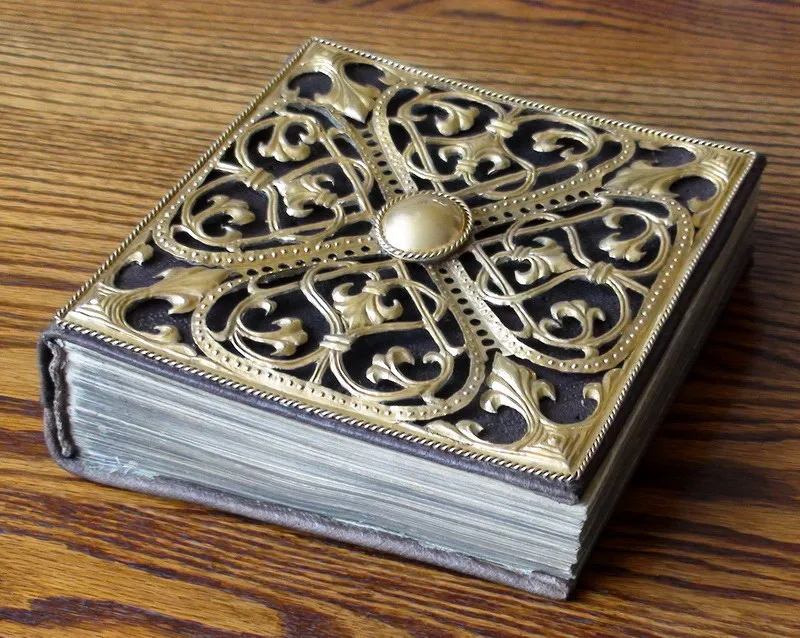
Unlike the 1990 book “The Nine Martyred Children of Kola”, I left the reverse sides completely blank. I did not sew front-to-back connections across pages. Instead, I inserted the sheets into a leather hardcover binding.
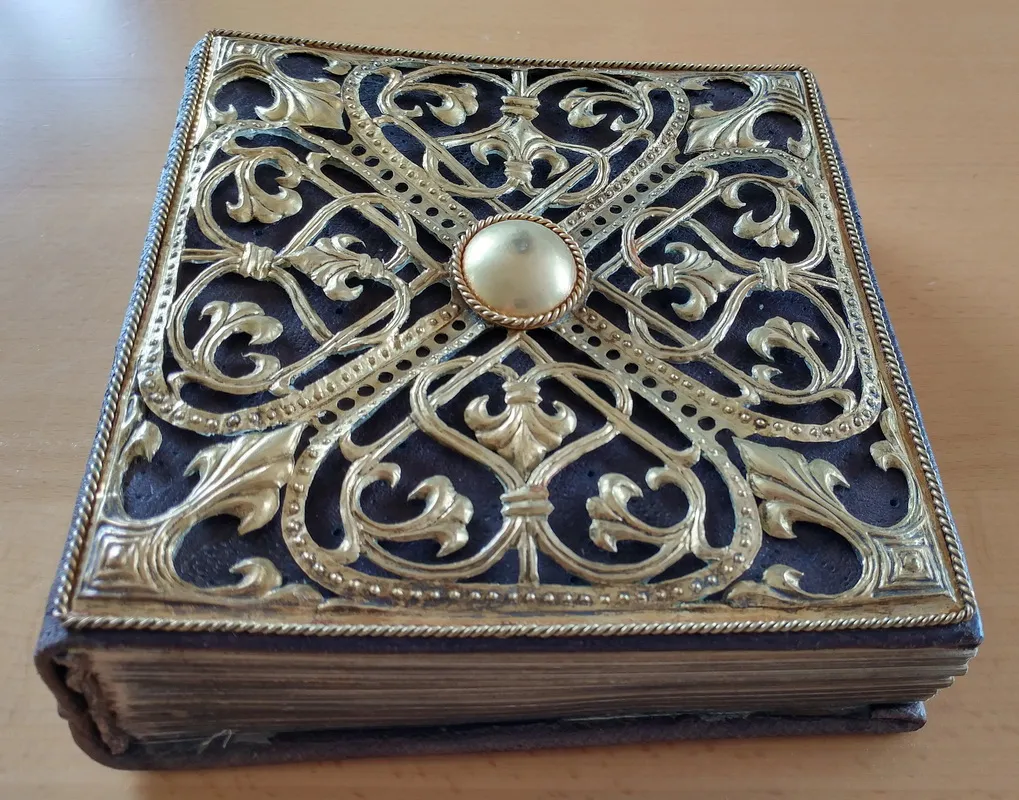
Later, my friend — a skilled goldsmith — attached a gilded metal ornamental plate to the front cover. This detail symbolically reflected the royal and courtly nature of the literary work.
About the Text: Abdulmesiani by Ioane Shavteli
“Abdulmesiani” (“The Praise of the Messiah”) is a remarkable panegyrical poem. Based on literary history and the context of the poem, Ioane Shavteli composed it in the late 12th or early 13th century. He served as one of the most prominent court poets during Georgia’s Golden Age under Queen Tamar (reigned 1184–1213) and her husband David Soslan.
Most medieval Georgian hagiographic and religious texts draw mainly on biblical sources — the Gospels, Psalms, and patristic writings. Shavteli’s work stands apart. It shows deep roots in Christian theology and scriptural imagery. At the same time, the poet displays sophisticated knowledge of contemporary European and Asian traditions — especially Persian and Arabic court poetry and philosophical treatises. This cross-cultural erudition mirrors the cosmopolitan nature of the Georgian royal court at its height. Georgia then stood as a major power bridging East and West.
The poem forms a lengthy, highly stylized eulogy. It dedicates itself to Queen Tamar and David Soslan. It celebrates their virtues, military triumphs, and the divine mandate of their rule. The central theme focuses on the glorious victory at the Battle of Basiani in 1203. Georgian forces decisively defeated the Seljuk Turks there. This success secured the kingdom’s eastern borders and enabled the creation of the Empire of Trebizond as a Georgian vassal state.
Shavteli employs elaborate metaphors, biblical allusions, and royal ideology. He portrays Tamar as a God-chosen ruler, a defender of Orthodoxy, and a successor to biblical kings such as David and Solomon.
Stylistically, the poem stands out with short rhythmic lines and intricate rhyming patterns. This creates a musical, almost chant-like quality. The tone feels more formal and courtly than Rustaveli’s epic “The Knight in the Panther’s Skin”. Rustaveli’s masterpiece shines with philosophical depth, psychological insight, and narrative richness. Abdulmesiani, by contrast, serves royal patronage. It glorifies the monarchy and strengthens ideological unity. The structure relies heavily on repetition, parallelism, and dense ornamentation. It offers a fascinating example of medieval Georgian secular-religious poetry and the refined literary culture of the royal court.
Several medieval manuscripts preserve the work. It remains a key source for understanding the ideological foundations of the Georgian Kingdom during its greatest territorial and cultural expansion.