
From the Artist
Creation History for the 1990 Manuscript
In 1990, at the age of 24, I had already spent a full year intensively studying ancient Georgian manuscripts.
Georgia stood at a turning point. The Soviet Union was falling apart. The independence movement gathered strength. In October 1990, the country held its first multiparty elections. The Round Table — Free Georgia coalition won decisively. This victory opened the path to formal independence in 1991.
Economic hardship and political uncertainty marked those days. The old system collapsed. People returned to the Church in large numbers — after decades when only a few dared to attend services openly under Soviet rule.
In this atmosphere of national awakening and spiritual rediscovery, I immersed myself in hagiographic literature and Georgia’s deep Christian heritage. The short yet powerful story of the Nine Martyred Children of Kola drew my attention most strongly. Innocent youths chose faith over family and life itself — at a time when Christianity remained fragile and persecuted in the region. Their martyrdom echoed the growing desire to reclaim lost roots and spiritual identity.
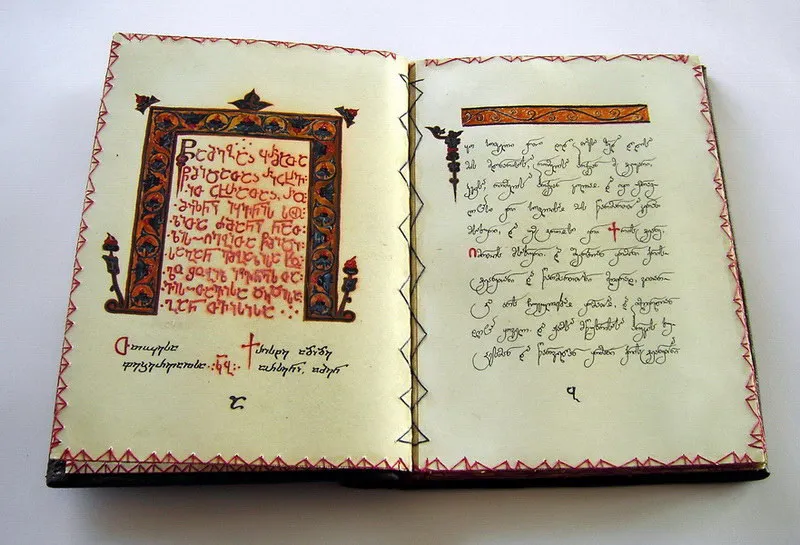
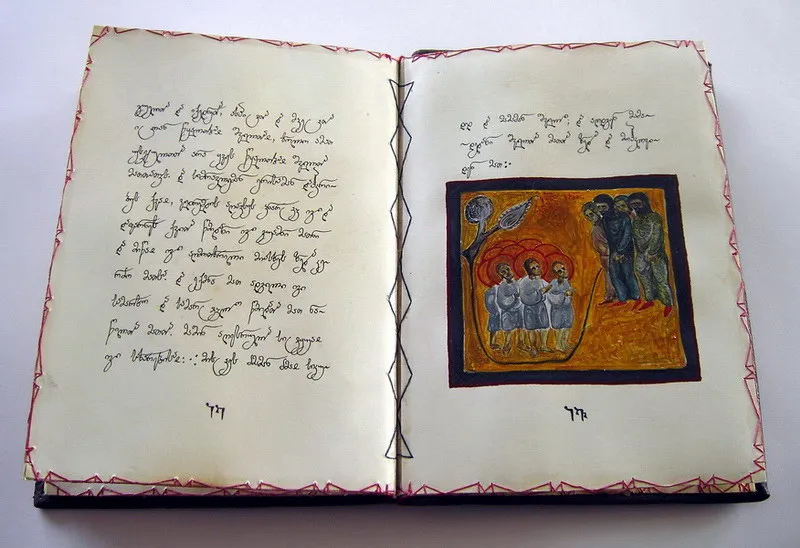
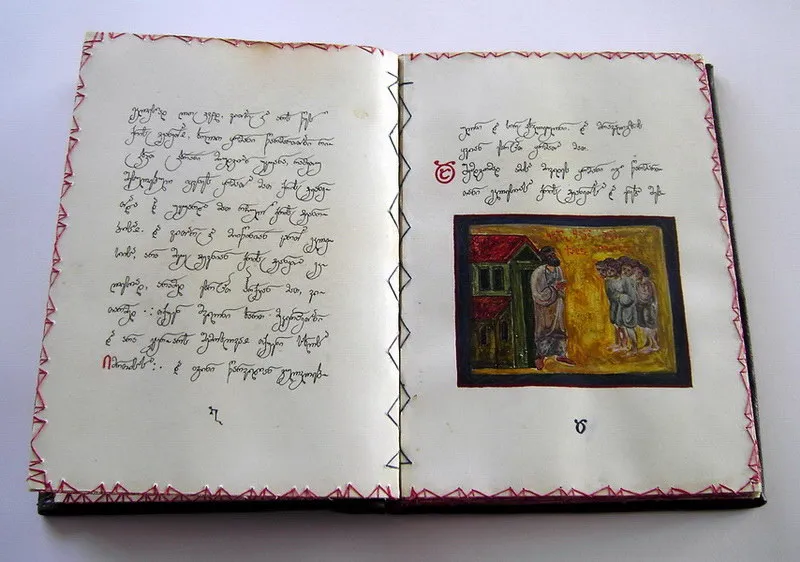
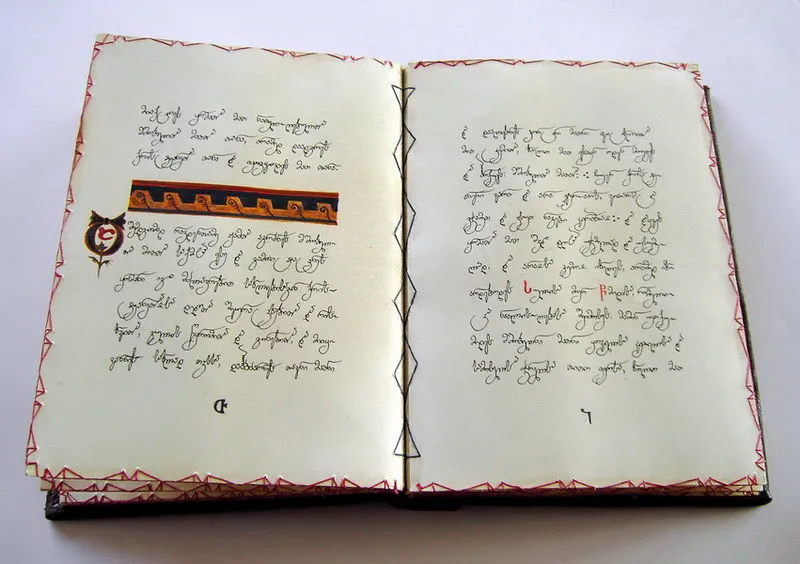
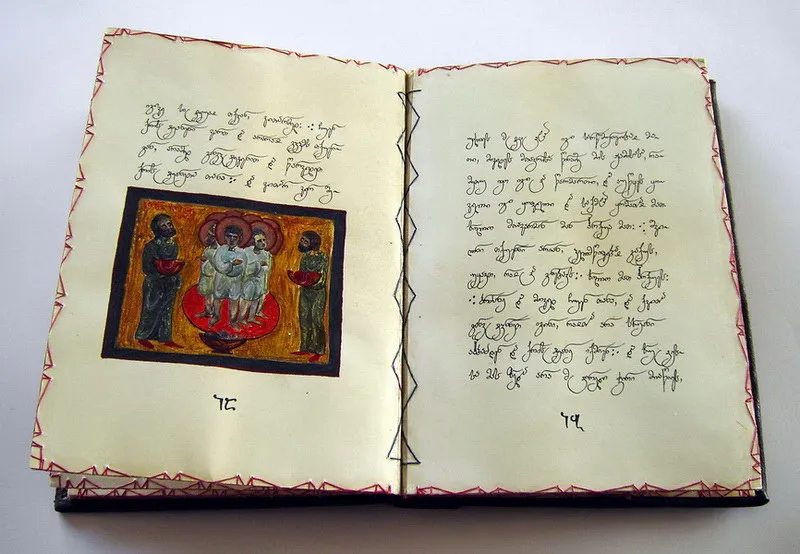
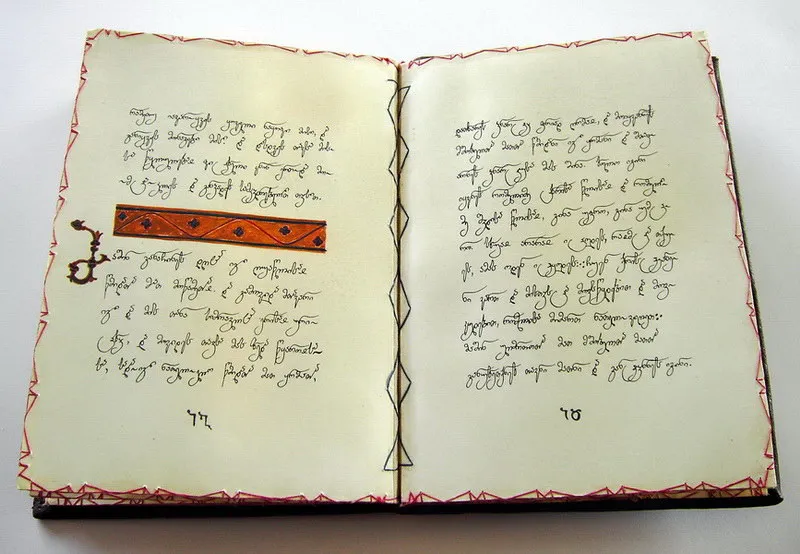
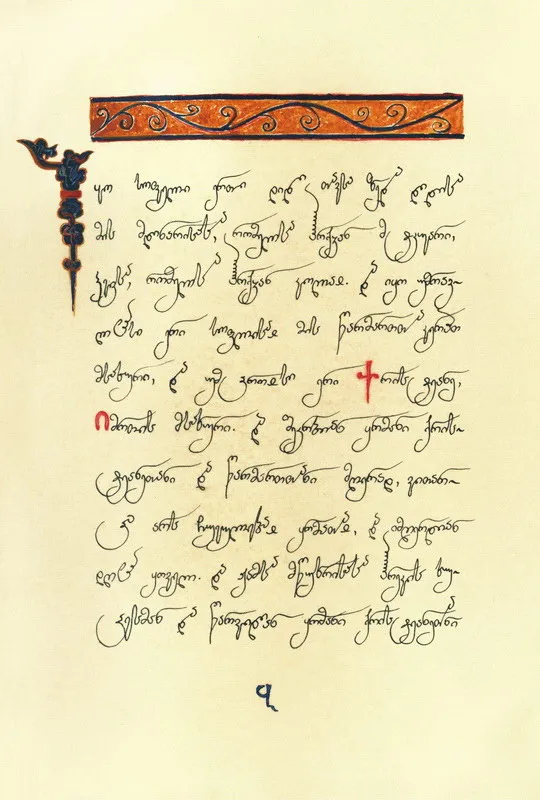
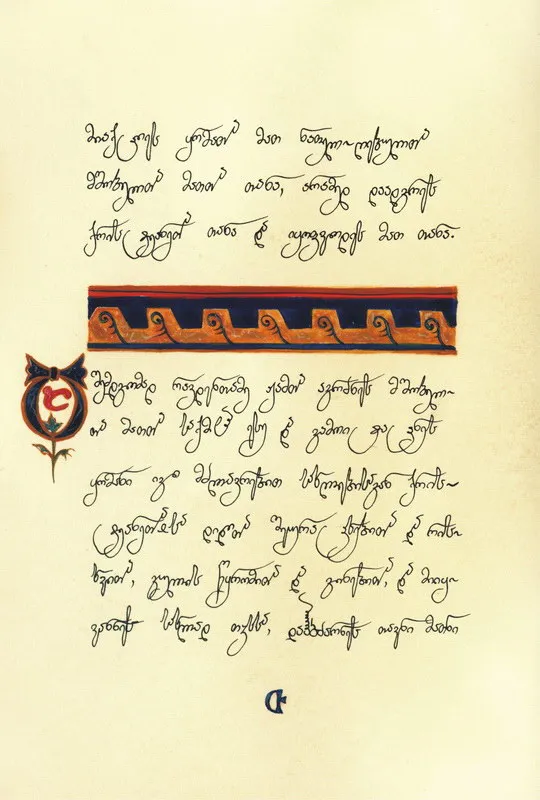
In 1990, I recreated this text in a fully handmade illuminated manuscript. I wanted to bridge ancient spiritual heritage with modern calligraphy. I aimed to preserve a story that still inspires devotion and cultural identity today.
Technical Details and Binding Method
No modern textbooks existed. Georgian calligraphy had lain dormant for nearly two centuries. I relied only on careful study of reproductions from historical manuscripts. I created my first revival works as complete handwritten books — not isolated exercises.
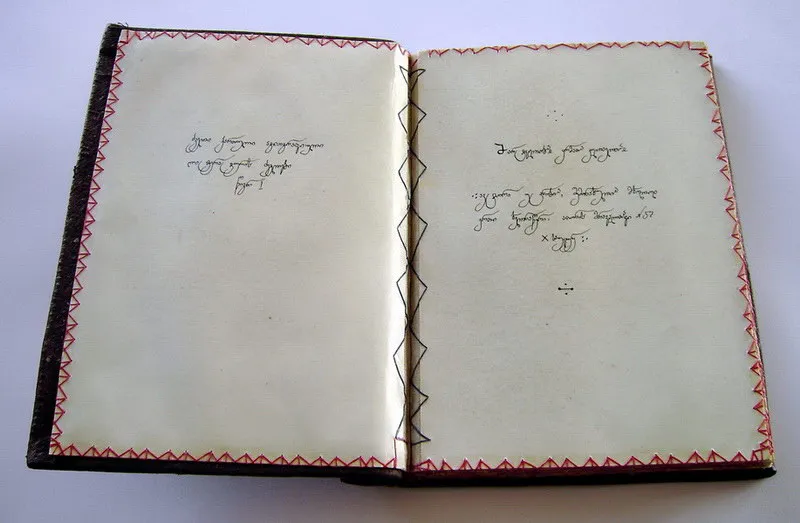
For “The Nine Martyred Children of Kola”, I chose thick drafting paper — the kind architects and engineers used for technical drawings then. I executed all text and illuminations on one side only. I made this choice deliberately.
After finishing the writing and illumination, I applied a protective layer of paraffin wax to the pages. This shielded the ink from fading and environmental damage. The wax made the paper slightly translucent. Double-sided writing would have reduced legibility and spoiled the appearance.
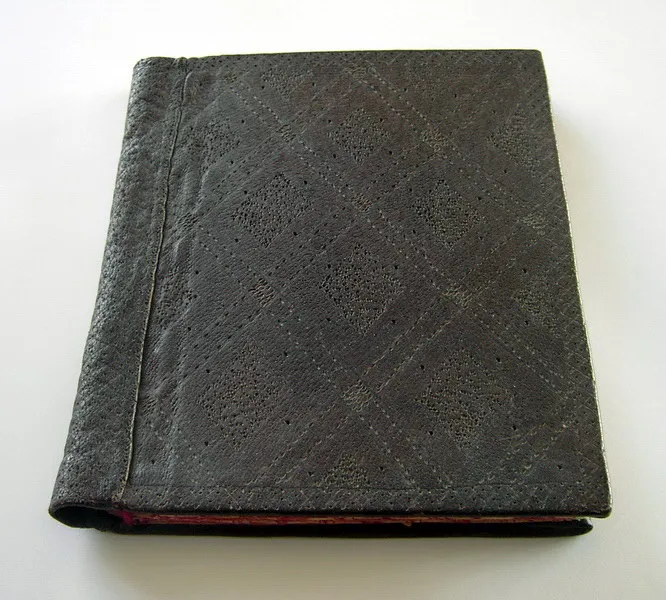
I left the sheets unbound at first. Then I hand-sewed them along all four edges with thread. This connected each page securely to the front and back covers in a flexible yet strong binding.
Later, this single-sided technique proved very useful for digital scanning. One-sided pages give cleaner, higher-quality scans — no bleed-through or interference from the reverse side. I continued using this approach in later digitized works.
This manuscript became one of the three foundational books. It marked the start of the modern revival of Georgian calligraphy — my personal artistic answer to a wider cultural and spiritual awakening.
About the Text: The Martyrdom of the Nine Children of Kola
This manuscript reproduces one of the earliest and most moving works of Georgian hagiographic literature — an anonymous account of the martyrdom of nine young children from the village of Kola, in the historical region of Tao, southern Georgia, at the source of the Mtkvari River. The story dates to the 5th–6th century, when Christianity was newly arriving in the region and faced strong resistance from pagan traditions.
In a mixed pagan-Christian village, most people worshipped idols, but a small group followed the true faith. Christian and pagan children played together every day. At dusk, when the village priest rang the bell for evening prayers, the Christian children went to church. The nine pagan boys — Guram, Adarnase, Bakar, Vache, Bardzim, Dachi, Juansher, Ramaz, and Parsman, aged 7 to 9 — followed them. They loved the hymns and sermons they heard from outside.
Though repeatedly turned away as “children of idol-worshippers,” they refused to give up. One day, they tried to enter by force. The Christian children explained: “If you wish to come inside, believe in our Lord Jesus Christ, be baptized in His name, receive His holy mysteries, and join us.”
The nine boys joyfully accepted. They asked the priest to baptize them. One winter night, in secret, the priest led the children and some faithful to the icy source of the Mtkvari River — because daytime baptism was too dangerous under pagan eyes.
A miracle happened: the freezing water warmed like a bath. Invisible angels clothed the newly baptized children in white garments of purity. After baptism, they refused to return to their pagan homes and stayed with the Christians.
When their parents learned of the conversion, they reacted with fury. They dragged the children home by force, beat them severely, and tried every way to make them renounce their faith. The boys declared: “We are Christians and will not eat or drink what is offered to idols.”
For seven days, they refused all food and drink. The Holy Spirit sustained them. The parents then tried another way: they offered colorful clothes, toys, and gifts. The children answered firmly: “We are Christians and want nothing from you. Let us return to the Christians.”
When the parents saw they could not break the boys’ faith, they turned to the local ruler. He replied: “They are your children — do with them as you wish.” The parents then invited the ruler to watch and help stone the children, so others would not follow their example.
They set a day for the execution. At the baptism site, they dug a deep pit. The parents brought the boys and threw them inside. The children cried out: “We are Christians and will die for the One in whose name we were baptized!”
The parents and villagers stoned them until the pit was filled and the bodies covered with earth. In this way, the place of their martyrdom became their grave as well.
This soul-stirring story shows the dramatic arrival of Christianity in early Georgia. It highlights innocent faith, the pain of familial betrayal, and the power of divine grace. The nine children are venerated as saints in the Georgian Orthodox Church.