
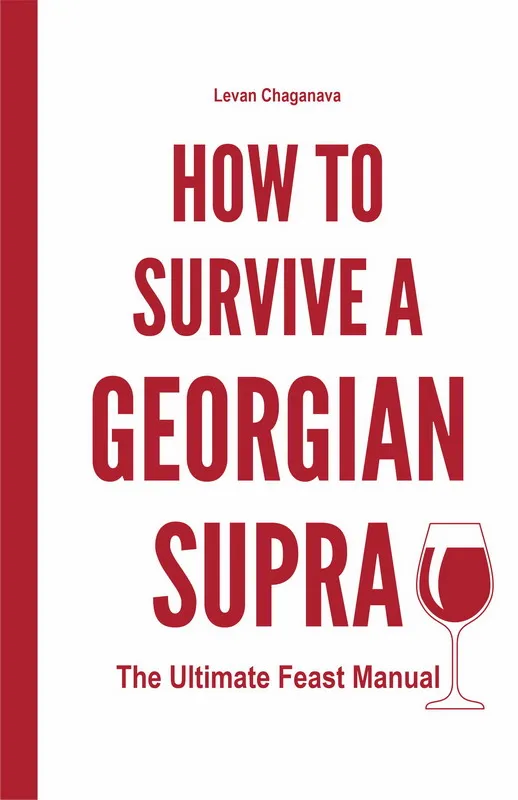
Why Do You Need This Guide?
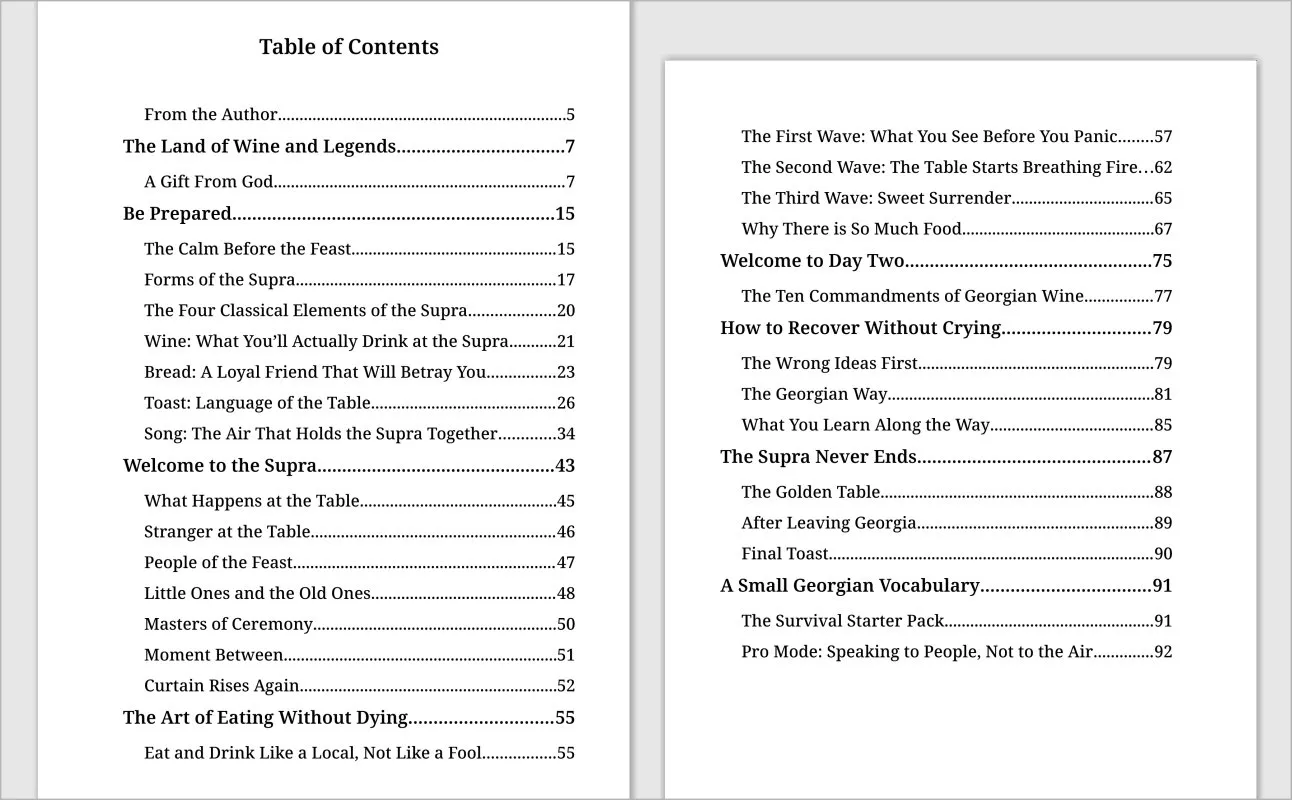
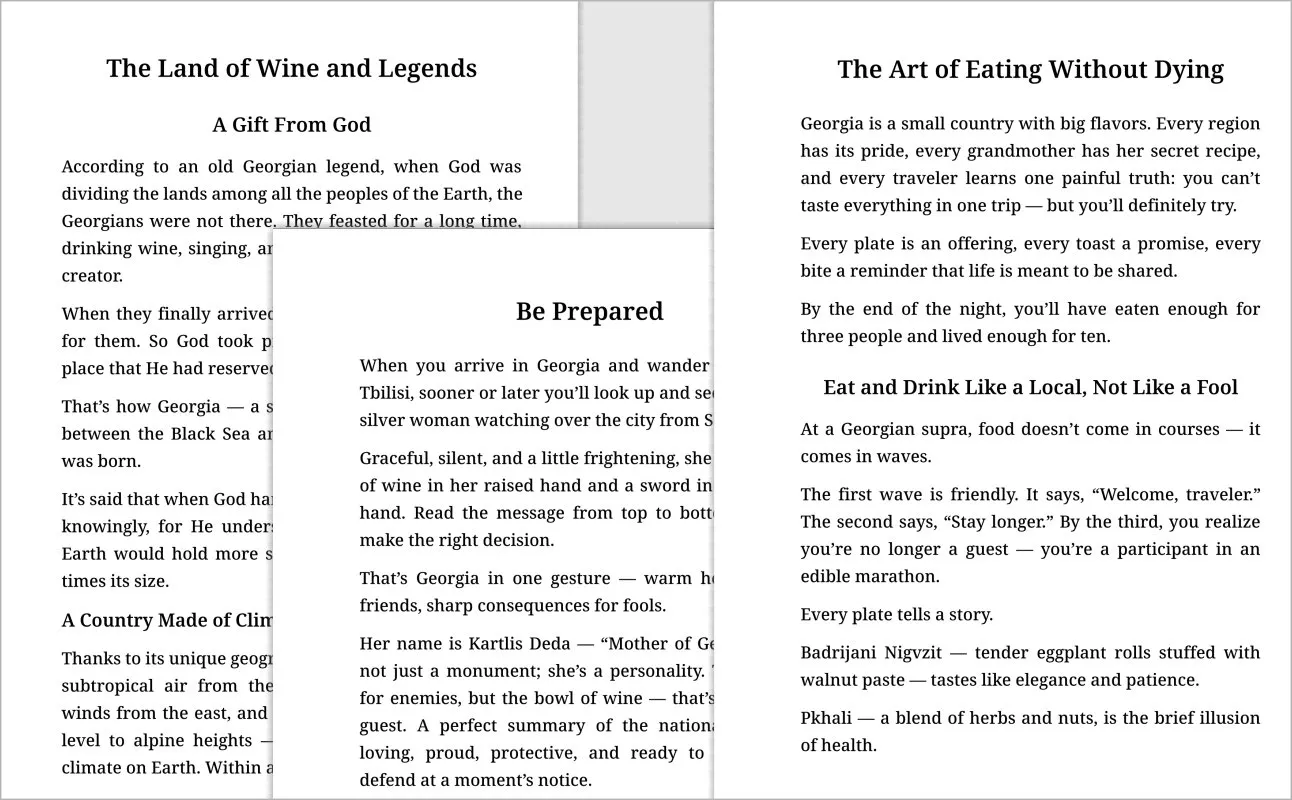
The guide explains why Georgia is known as the cradle of wine, how food and wine interact throughout the feast, and who the people at the table are. You’ll understand the role of the tamada (toastmaster), why toasts matter more than volume, and how songs and silence are equally important parts of the evening.
The book also explores what happens after the table clears — how Georgians recover calmly after long feasts, and why balance matters more than endurance.
Useful Georgian Language Phrases
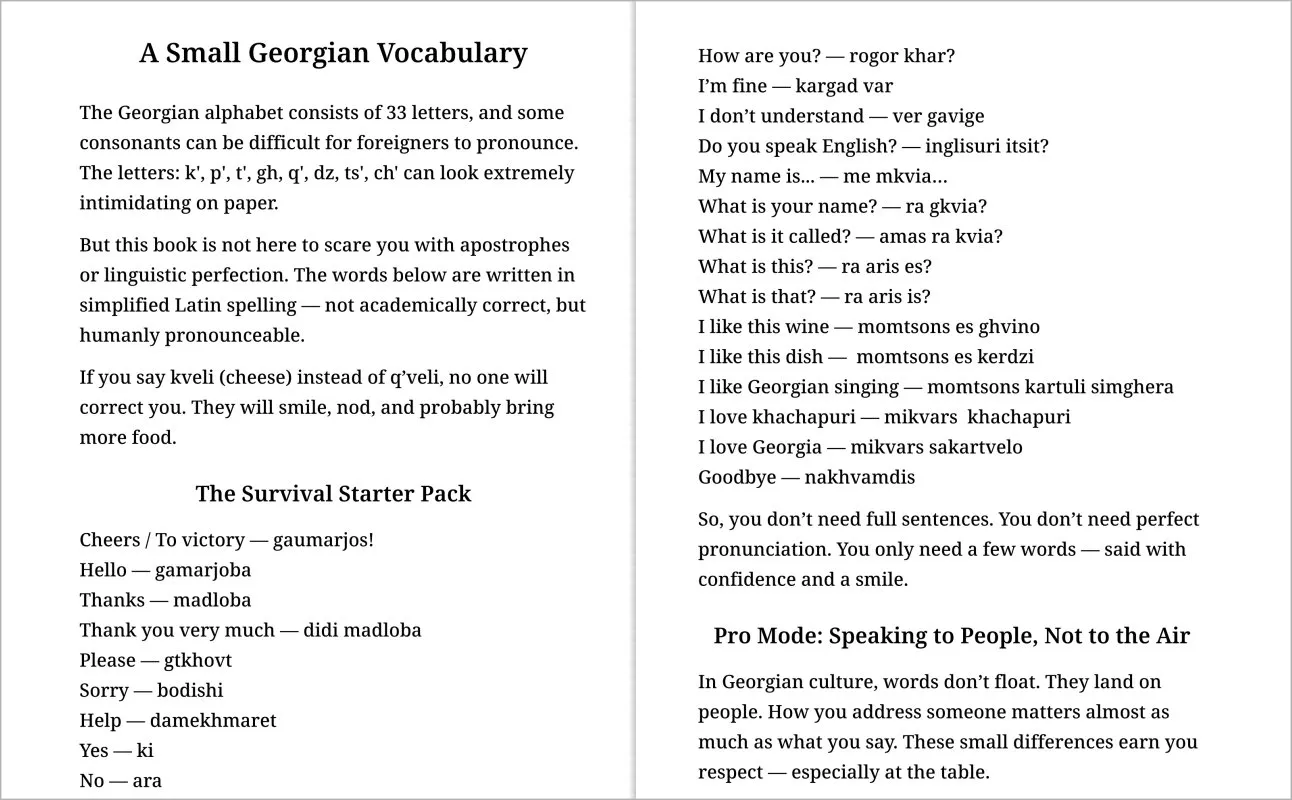
A dedicated section introduces essential Georgian words and expressions that actually work at the table. These are not grammar lessons, but practical phrases — greetings, compliments, polite refusals, and respectful forms of address.
All phrases are written in simple Latin letters, designed to be heard, remembered, and used naturally in real conversations. The goal is not fluency, but connection — speaking to people, not to the air.
Why Preparation Matters
A Georgian supra follows its own logic. Guests who arrive unprepared often eat too fast, drink out of rhythm, accept everything without knowing how to refuse politely, and rely on a single word — “Madloba” — to survive the evening.
This guide helps you slow down, observe, and participate with confidence.
Eat slowly. Drink wisely. Listen carefully. Speak when it matters. And whatever you do — don’t refuse the toast.
From the Author
This book was born the same way most Georgian supras begin — with curiosity, enthusiasm, and no clear stopping point. I wanted to write honestly about Georgian food, wine, and table culture — not as theory, but as experience.
It is written from inside the table, where stories repeat, glasses refill themselves, and meaning matters more than precision. If, while reading, you suddenly feel the urge to eat something with walnuts and drink a glass of wine, that’s normal.
This is not a survival guarantee. It simply improves your chances.
Welcome to the table. Stay as long as you like.