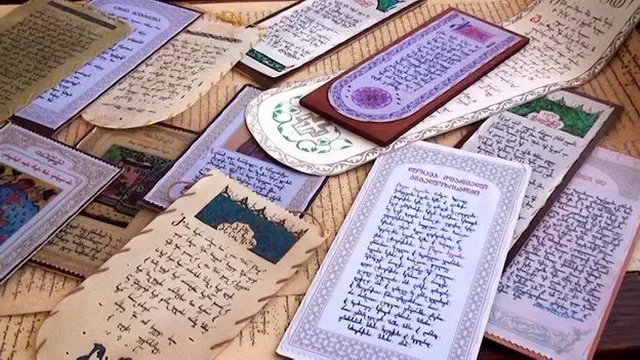
12 Handwritten Books – Modern Georgian Manuscripts
Revival of the Forgotten Art of Georgian Calligraphy
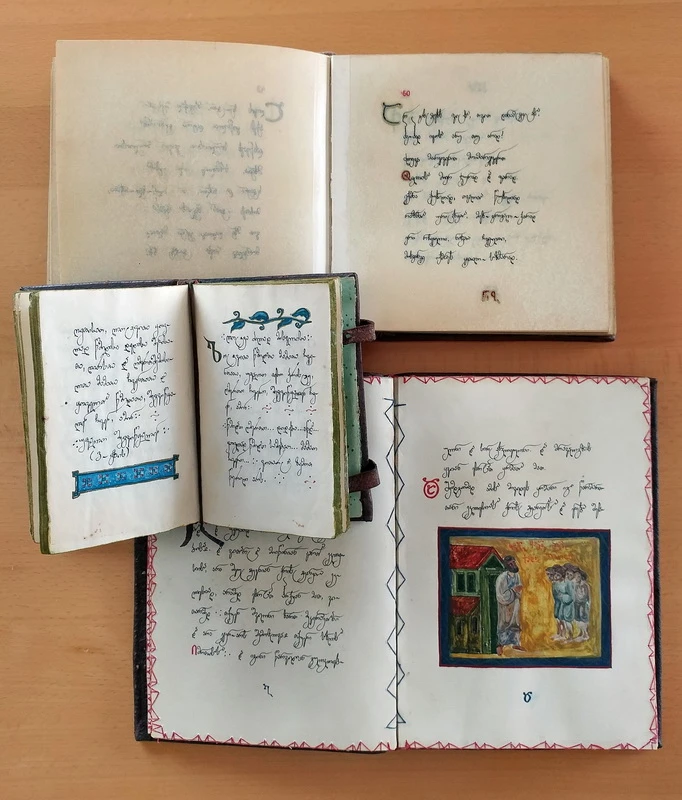
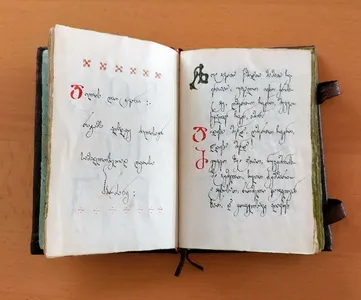
Since 1990, the revival of calligraphy in Georgia began with the creation of three handwritten books:
1990 - The Nine Martyred Children of Kola (20 pages)
1991 - Abdulmesiani (108 pages)
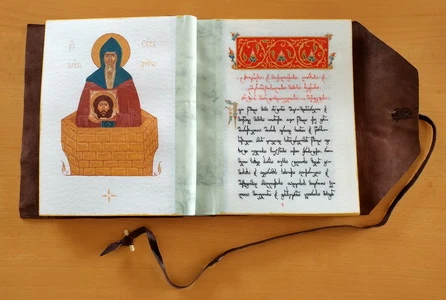
1992 - Orthodox Prayers (64 pages)
We welcome serious exhibition proposals and inquiries for acquisition or long-term placement.
Levan Chaganava became interested in Georgian calligraphy in 1989. At that time, this ancient art had been forgotten in Georgia for nearly two centuries, and there were no instructional books or educational materials.
As he studied reproductions of medieval manuscripts and improved his handwriting, he realized that calligraphy had evolved along with the art of handwritten books.
Levan began making his own manuscripts and soon completed three books using different binding techniques.
The Foundational Trilogy (1990–1992)
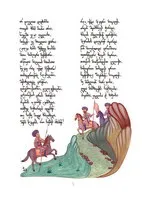
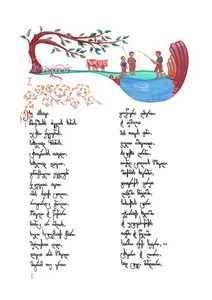
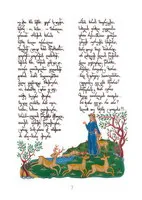
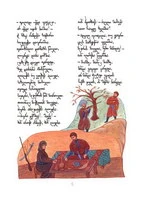
After a two-century hiatus, Levan Chaganava’s three illuminated manuscripts from 1990 to 1992 marked the beginning of the revival of the Georgian calligraphy tradition.
These early books were born in a time of national awakening, spiritual rediscovery, and later — open crisis. The third one was created in January 1992, amid the chaos of armed clashes in Tbilisi, power outages, and food shortages. It became a quiet act of cultural and spiritual resistance.
Later Works (2009–2014)
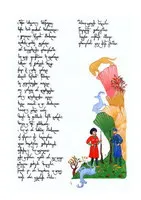
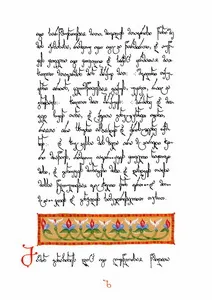
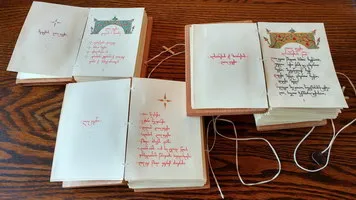
Later books expanded the revival. Some remained unbound to allow individual pages to be framed for exhibitions. Others exist in variant handmade copies with original cover artwork.
All twelve manuscripts are unique cultural artifacts. They connect Georgian literary and spiritual heritage with modern artistic expression.
Exhibitions and International Recognition
Since 2009, Levan Chaganava’s works have been permanently exhibited at the Contemporary Museum of Calligraphy in Moscow. There, he connected with calligraphers worldwide and later partnered with many of them on international projects.
In 2010, he founded the Painter-Calligraphers Union of Georgia. He began teaching calligraphy to young talents and organizing joint projects to create modern handwritten books.
On 14 July 2012, he organized Georgia’s first international calligraphy exhibition. The event featured works by local and foreign calligraphers. 14 poems by Vazha-Pshavela were presented as complete illuminated manuscripts created by Georgian calligraphers. Alongside them were 21 impressive calligraphic works based on Vazha-Pshavela’s verses in various languages, created by international artists from Japan, Russia, Ukraine, Italy, Germany, the Netherlands, Norway, Colombia, Peru, and Argentina.
The Painter-Calligraphers Union of Georgia declared 14 July as Contemporary Georgian Calligraphy Day.
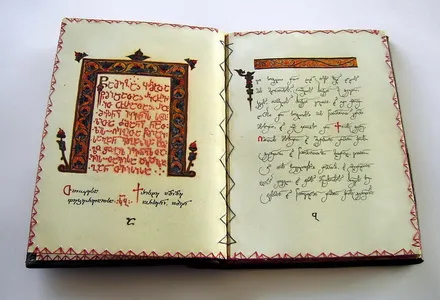
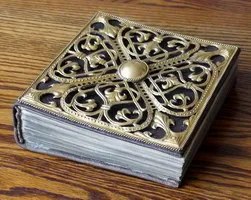
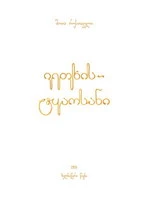
(Shota Rustaveli Poem)